Indholdsfortegnelse
A grain cleaning machine should remove the specified unwanted material while retaining as much acceptable grain as the agreed process requires. A high visible discharge rate does not establish a good cleaning result. Buyers need measurements of accepted grain, remaining impurities and sound grain lost in the reject streams.
This guide explains how to specify a grain cleaning machine using the actual crop and contamination, select a representative trial and compare screen and airflow settings. It focuses on combined screening and air-separation equipment. It does not assume that a basic cleaner can replace every grading, destoning, optical sorting or seed-processing stage.
Describe the crop and its impurity problem
Identify the crop, variety where relevant, condition and intended next use. Prepare a sample that represents the received grain, including the ordinary range of impurities. A grain cleaning machine tested with an unusually clean sample may appear to perform well without addressing the buyer's real separation problem.
Separate the unwanted material into meaningful groups: oversize debris, fine material, light material and contaminants that resemble the crop in size or weight. Screening and air separation rely on physical differences. A grain cleaning machine should be selected for the separations it can make rather than described as removing every contaminant equally well.
Define the accepted grain specification before discussing capacity. The receiving mill, buyer or farm process may impose particular quality requirements. Record the test method and sampling procedure associated with those requirements. A general claim of “clean grain” is difficult to verify and gives the supplier little basis for choosing screens and settings.
Understand what screening and air separation do
Screens separate material according to how it passes or is retained by the openings under the grain cleaning machine's operating motion. Air separation uses differences in aerodynamic behavior. A grain cleaning machine combining these methods can address several impurity fractions, but its performance depends on the material and setup.
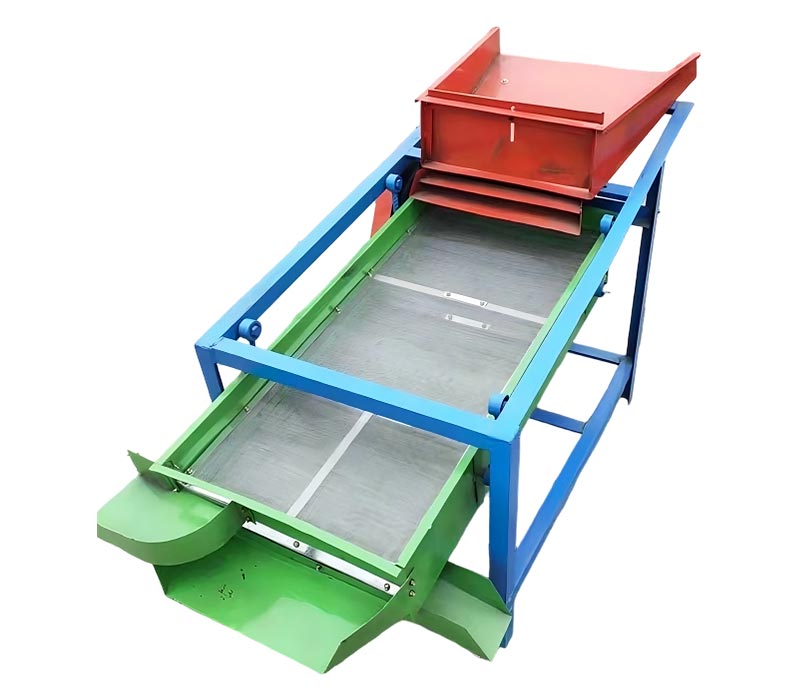
Jinyuan describes a grain impurity remover with double-layer replaceable screens, air separation and distinct discharge outlets. The page lists a nominal 1–2-ton-per-hour output for the described equipment. Request the exact model, crop, impurity level and setup supporting that figure before planning a grain cleaning machine installation.
Some source-page symbols and percentage descriptions need clarification. Do not convert an unclear catalog symbol into a guaranteed cleanliness or breakage limit. Agree on measurable acceptance requirements and obtain a written, configuration-specific proposal. This gives the buyer a clearer commitment than repeating a percentage without its sampling and test conditions.
Choose screens around the actual grain dimensions
Ask which screen opening shapes and sizes are supplied for the intended crop. Nominal hole size is only one part of the separation arrangement. A grain cleaning machine should have the complete screen set identified, including its position and the outlet associated with each fraction.
Trial the proposed screens with representative material. Inspect oversize and undersize rejects as well as accepted grain. If sound grain appears in a reject stream, investigate whether the screen, feed condition or operating setup is causing loss. The grain cleaning machine should not be accepted for clean output if it achieves that result by discarding an unacceptable quantity of good grain.
Keep screen identification with the grain cleaning machine record. Photographs, opening dimensions and supplier part references make later replacement more reliable. If the operation handles several crops, request a documented screen and setup plan for each one. Do not assume that a screen suitable for wheat will produce the required result on maize, rice or soybeans.
Adjust airflow using collected fractions
Airflow should be assessed by its effect on light impurities and grain retention. Start from the manufacturer's recommended procedure and change settings in a controlled way. A grain cleaning machine can send valuable material into the light fraction if the air setting is unsuitable for the crop and condition.
Collect and inspect all streams after each documented adjustment. Keep the feed condition and screen arrangement stable while investigating airflow. Changing several settings together makes it difficult to identify the cause of a result. A grain cleaning machine trial should show the buyer the usable adjustment range rather than only one visually impressive air-discharge condition.
Penn State Extension's discussion of oilseed cleaning describes the roles of separation and cleaning in material handling. Use that background to understand the process, while obtaining crop-specific settings and evidence for the actual machine. Air behavior varies with particle properties, so a general description does not establish one airflow setting for every grain batch.
Control feeding before judging capacity
Record how material enters the hopper and reaches the screens. Uneven or excessive feeding can change separation performance and make a short trial unrepresentative. A grain cleaning machine should be demonstrated with a practical feed method that the receiving site can maintain.
Include the upstream handling equipment in the proposal where necessary. A hopper does not automatically provide the same feed control as a complete receiving and metering system. Ask how bridging, surges and changes in material condition are managed under the supplier's instructions. Identify any accessories that must be supplied separately.
When increasing rate during a trial, measure accepted-grain quality and losses at each stable condition. The highest mass rate passing through the grain cleaning machine may not be the highest acceptable rate. Record interruptions and operator intervention so that the chosen grain cleaning machine duty reflects ordinary work rather than a brief peak.
Measure a material balance and grain loss
Weigh the representative input and the collected accepted and rejected fractions over a defined test boundary. Identify material retained in the grain cleaning machine and any uncollected dust or spills. A grain cleaning machine report should explain differences in the mass balance instead of ignoring them.
Inspect a representative portion of each reject stream for sound grain. Report loss using an agreed denominator and sampling method. For example, 2 kilograms of sound grain found in rejects from a 200-kilogram input batch represents 1 percent of input mass. This is an arithmetic illustration, not a performance result for Jinyuan's grain cleaning machine.
Measure remaining impurities in the accepted fraction using the agreed procedure. Keep that result separate from sound-grain loss and throughput. A setting can produce cleaner grain while increasing loss, or higher throughput while leaving more impurities. The accepted operating point is the combination that meets the buyer's defined requirements, not whichever single metric looks best.
Compare suppliers on the complete separation result
Use the same crop sample and acceptance definition when practical. If sample conditions differ, state the difference explicitly. A grain cleaning machine proposal should identify the screens, feed rate, airflow arrangement and handling conditions behind its performance figures.
| Result | What to measure | Why it matters |
|---|---|---|
| Input duty | Crop, condition, contamination and mass rate | Establishes the test boundary |
| Accepted grain | Output mass and remaining impurity level | Shows whether the useful product meets the requirement |
| Reject streams | Mass and sound-grain content | Reveals valuable product lost during cleaning |
| Stable operation | Interruptions, adjustment and intervention | Shows practical working capacity |
| Crop changes | Screen identification and changeover procedure | Defines flexibility and labor requirements |
| Dust handling | Supplied collection scope and site connections | Clarifies installation responsibilities |
Ask whether the grain cleaning machine is intended only for pre-cleaning or can meet the final specification under the proposed conditions. If an additional separator is necessary, include it in the process plan. Do not accept a basic screening and air-separation demonstration as proof that every foreign material or quality defect has been removed.
Plan the installation and dust management
Prepare a layout showing feed delivery, accepted grain collection, reject collection, service access and movement around the grain cleaning machine. Check outlet heights and container clearance. A grain cleaning machine can fit its footprint while still lacking enough space to remove screens or collect several fractions safely.
Confirm the electrical supply and the exact motor configuration with the supplier and a qualified electrician. Ask what dust-handling equipment is included and what the site must provide. Grain dust requires appropriate housekeeping and an assessment of the actual installation hazards. Do not assume that a cleaner with an air stream includes a complete dust-control system.
Use the supplied instructions for support, stabilization, guarding and isolation. If the grain cleaning machine has movable casters, confirm how it is secured during operation. Keep access to moving screens and drives controlled. A maintenance procedure should explain how material is cleared and screens are changed while preventing unexpected startup.
Build a crop-specific handover record
Record the grain cleaning machine identification, crop, screen set, feed arrangement, airflow setting, test period and accepted results. Keep photographs of the outlets and collected fractions. This gives operators a repeatable starting setup and helps a supplier investigate later changes in performance.
Reassess the setup when the crop, moisture condition, impurity profile or screen changes. Do not compensate for a blocked or damaged screen solely by changing feed or airflow. Inspect and service the machine using the approved procedure, then repeat a measured check. Keep old settings and results so that changes can be traced.
Send Jinyuan the crop, representative sample information, required accepted output, impurity specification, acceptable grain loss, power supply and destination. Request a grain cleaning machine offer supported by a material trial, screen identification and a clear installation scope. Use the forespørgselsformular to share the sampling and acceptance requirements before the order is finalized.
Gennemgå grain cleaning machine product information og the Screening Udstyr rækkevidde, og send derefter applikationsdetaljerne for et konfigurationsspecifikt tilbud.
Ofte stillede spørgsmål
Is grain cleaning machine throughput the same as accepted clean-grain output?
No. Input throughput includes material that later becomes rejects, retained material or losses. Measure accepted output and its impurity level separately, with a material balance over the same trial period.
Can one grain cleaning machine screen set handle every crop?
Do not assume so. Grain dimensions and contamination differ. Request appropriate screen arrangements and trial evidence for each intended crop, and retain clear identification of the supplied screen sets.
Can increasing airflow improve every cleaning result?
More airflow may remove additional light material but can also carry acceptable grain into the reject stream. Evaluate collected fractions and change settings methodically using the manufacturer’s procedure.
What should a grain cleaning machine acceptance report contain?
Include crop condition, impurity profile, screens, feed and airflow settings, input and output masses, remaining impurities, sound-grain loss and interruptions. State the sampling and calculation methods used.
What information helps Jinyuan propose a grain cleaning machine?
Provide the crop, representative sample, desired accepted output, impurity limits, acceptable grain loss, feed method, power and destination. Request a configuration-specific trial and complete screen, installation and service scope.