Πίνακας Περιεχομένων
A diesel irrigation pump should be selected for the water duty it must deliver at the field, including the lift from the source and the losses along the pipe. Engine power and outlet diameter help identify a product family, but neither establishes the operating point. A buyer who supplies the required flow, total head, source conditions and daily operating window gives a supplier enough information to propose a meaningful configuration.
This guide explains how to prepare that specification, compare quotations and design an acceptance check. It focuses on sizing a diesel irrigation pump for a defined irrigation zone. Jinyuan's existing article about remote and mobile pumping explains the wider application case. Here, the decision is narrower: what evidence demonstrates that a proposed pump can supply the selected zone under the least favorable normal water level?
Define the irrigation zone before choosing equipment
Begin with the irrigation system, including how many outlets operate together. For sprinklers, record the number of active sprinklers, the required flow of each and the pressure required at the sprinkler inlet. For an open-channel or tank-filling duty, define the receiving volume and the time available. A diesel irrigation pump serving several zones should be checked against each distinct flow and pressure combination.
Use consistent units and separate the agronomic water requirement from the hydraulic equipment requirement. An irrigation designer may determine the application depth, irrigation interval and allowable run time. The equipment buyer then translates the approved operating plan into a flow requirement. Choosing a diesel irrigation pump before deciding which outlets run together can leave the installation with excess flow in one zone and insufficient pressure in another.
For illustration, suppose a receiving tank needs 240 cubic meters during a four-hour pumping window. The average delivery requirement is 60 cubic meters per hour. This is an arithmetic example, not a Jinyuan performance rating. Additional allowance, if necessary, must come from identified interruptions or operating constraints. Adding an unexplained percentage makes quotations harder to compare and may move the diesel irrigation pump away from an efficient operating region.
Calculate head as a system requirement
Total dynamic head combines the elevation difference between the source water surface and the delivery point, the pressure needed at delivery, and the hydraulic losses in the installed flow path. Include relevant suction and discharge pipe, valves, bends, filters and fittings. When a diesel irrigation pump serves pressurized irrigation, the sprinkler or emitter pressure requirement belongs in this calculation.
Consider a simplified example with 12 meters of elevation rise, 25 meters of required pressure head at the delivery point, and an estimated 8 meters of losses at the design flow. The resulting requirement is 45 meters of total head. Those loss estimates must be checked against actual pipe dimensions and operating flow. A diesel irrigation pump quoted at its maximum head cannot automatically supply its maximum listed flow at the same time.
The source level can change throughout the season. Prepare a second calculation for the lowest expected normal source level and the most restrictive normal filter condition. Record the assumptions beside the calculation. If the supplier's curve covers only the favorable case, the quotation does not yet answer the farm's operating requirement. Explain unusual transient conditions separately rather than combining every imaginable event into one oversized duty point.
Treat suction conditions as a separate selection check
Measure the vertical distance from the lowest operating water surface to the diesel irrigation pump centerline and document the suction hose length, internal diameter, bends and inlet arrangement. A self-priming design still has physical limits. A diesel irrigation pump needs adequate available suction conditions, a sound seal on suction connections and a priming procedure suitable for its design.
Jinyuan's σελίδα προϊόντος lists broad suction and performance ranges across configurations. Do not interpret a family-level suction figure as a guaranteed installation allowance. Available suction performance changes with atmospheric pressure, altitude, water temperature, vapor pressure and suction losses. Ask the supplier for the suction limits and net positive suction head information that apply to the specific diesel irrigation pump configuration.
Keep the suction run short where practical and specify hose that resists collapse under suction. Position the inlet to reduce the chance of drawing air, sediment or floating debris, while respecting the supplier's required submergence. An ordinary discharge hose may not be suitable on the suction side. Photograph the proposed intake position and send a simple elevation sketch with the inquiry so that the supplier can assess the arrangement.
Read the diesel irrigation pump curve at the requested operating point
Request a curve for the actual pump model, impeller configuration and rotational speed being quoted. Mark the required flow and head on that curve. A diesel irrigation pump quotation should identify whether the stated duty lies inside the supplier's recommended continuous operating region and what power is required at that point.
Compare the diesel irrigation pump curve with the system curve rather than checking a single headline number. Changing pipe resistance changes the point at which a centrifugal pump operates. If future expansion is likely, show the future zone separately and ask whether a different speed, impeller or pump size is appropriate. Selecting a diesel irrigation pump solely for a distant expansion plan can create a poor operating match for the current system.
Ask which instruments and test method support the supplied curve, and whether the quoted tolerances are included in the commercial agreement. A curve without its speed, units or configuration is incomplete evidence. Oklahoma State University's guidance on irrigation pump system testing explains the relationship between system requirements and pump performance. Use that relationship to structure the supplier discussion, then confirm the proposed unit with application-specific data.
Compare configurations using the same specification
The table below organizes the decisions that should remain consistent across competing quotations. It does not rank engine brands or promise an efficiency advantage for a particular arrangement. The best comparison uses the same required duty and the same definition of what is included in the diesel irrigation pump package.
| Απόφαση | Αποδεικτικά στοιχεία για να ζητήσετε | Why it affects the purchase |
|---|---|---|
| Required water duty | Flow and head at the same operating point | Prevents comparison of unrelated maximum ratings |
| Suction arrangement | Permitted lift, inlet requirements and priming method | Checks whether the proposed intake can work |
| Drive arrangement | Coupling or belt details, speed and guarding | Defines maintenance and installation needs |
| Engine selection | Continuous-duty capability for the application | Distinguishes installed power from usable duty |
| Water quality | Solids limits, materials and filtration requirements | Helps prevent unsuitable service and rapid wear |
| Supplied package | Hose, valves, gauges, frame and starting equipment | Makes price and delivery scope comparable |
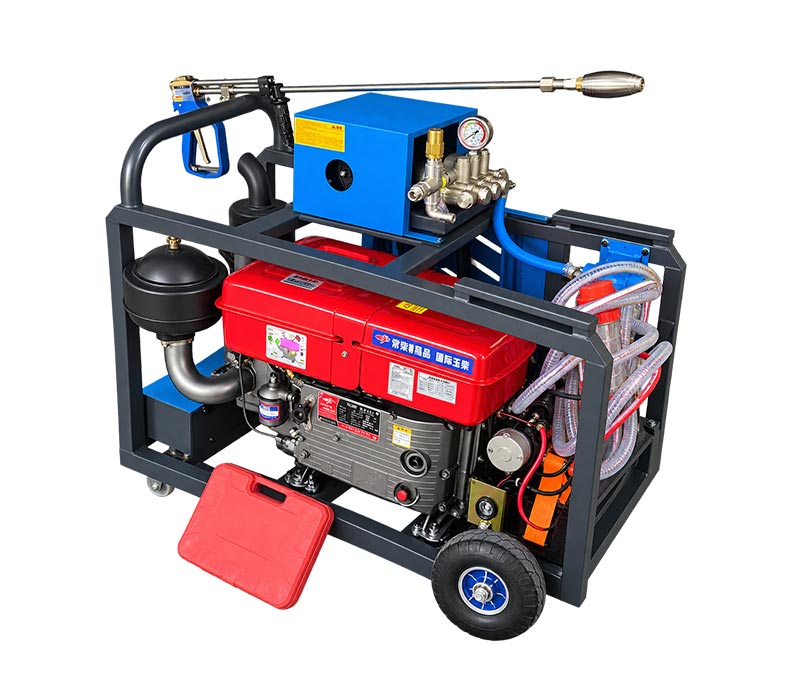
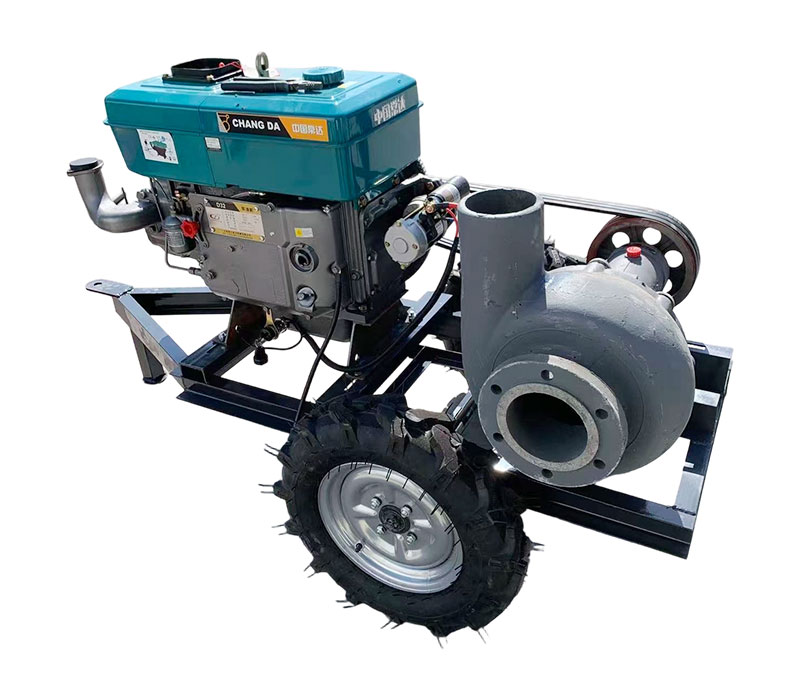
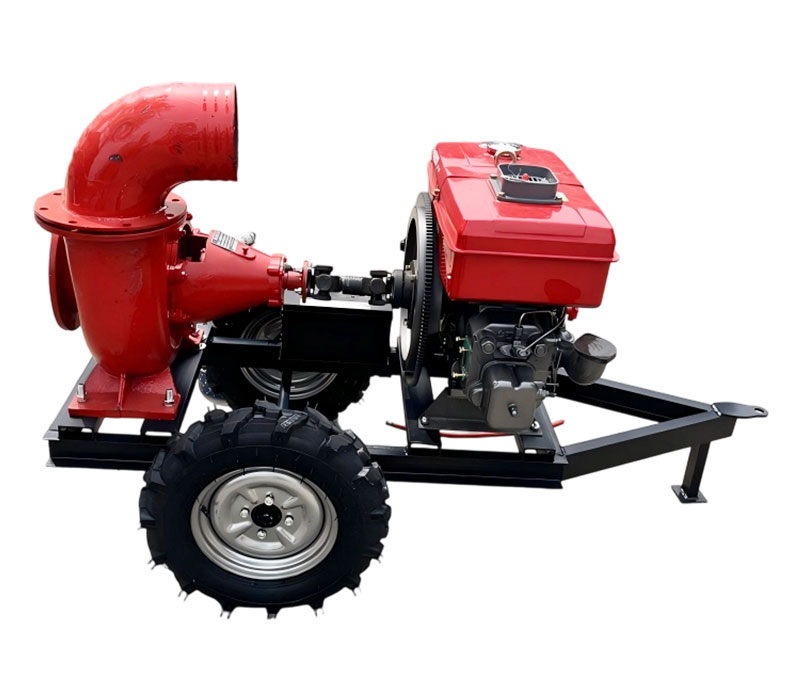
Jinyuan lists diesel water pump configurations with different connection sizes, flow ranges and head ranges. These figures describe a product family. For a diesel irrigation pump purchase, obtain the exact model sheet and a written duty confirmation. A larger connection may reduce some piping losses, but it does not prove that the diesel irrigation pump creates the pressure required by the selected irrigation zone.
Check the drive and daily operating plan
Discuss the anticipated hours per day, frequency of starting, ambient conditions and service access. An engine that can start a diesel irrigation pump is not necessarily an appropriate continuous-duty match. Ask how altitude and ambient temperature affect the proposed diesel irrigation pump package, and obtain the engine manufacturer's applicable maintenance requirements.
For a belt-driven arrangement, confirm pulley sizes, operating speed, alignment method, belt specification and guard coverage. For a coupled arrangement, confirm coupling identification, alignment requirements and access for servicing. Do not accept a substitution based only on nominal horsepower. The diesel irrigation pump package should retain the specified pump speed and a documented connection between the engine and the diesel irrigation pump.
Plan refueling, inspection and movement around the farm. A mobile frame needs a stable operating location and secure handling arrangements. If the diesel irrigation pump will remain in one position, clarify anchoring, vibration management and weather protection. Keep the engine exhaust clear of occupied areas and follow the supplied operating instructions. These arrangements should be reviewed before delivery rather than improvised during the first irrigation cycle.
Make acceptance testing reproduce the real duty
Agree on the acceptance conditions before placing the order. Record the diesel irrigation pump configuration, water source, hose and pipe arrangement, rotational speed, measurement points and stabilization period. A diesel irrigation pump should be assessed for flow and pressure together, with enough operating time to observe stable behavior under the agreed conditions.
A useful report includes the equipment identification, test date, instruments used, operating speed, measured flow, suction conditions and discharge pressure. Note water level changes during the test. Photographs and a short video support the record, but they do not replace measured values. A diesel irrigation pump shown moving water through an open hose has not demonstrated its capability at the required irrigation pressure.
If site testing differs from factory testing, document the difference explicitly. A longer suction run or smaller delivery hose can change performance. First compare the actual installation with the agreed specification before concluding that the diesel irrigation pump is defective. Keep the acceptance record with the order documents so that later maintenance investigations can compare current behavior with an established baseline.
Compare operating cost with measured delivery
Estimate cost per delivered cubic meter using fuel, operator time, routine service, consumables and the water volume actually delivered during the same period. Purchase price is only one part of the decision. A diesel irrigation pump that takes longer to complete the irrigation task may create scheduling costs even when its initial price is lower.
Avoid using an assumed fuel-consumption figure across every operating point. Ask for the basis of any supplier estimate and verify representative performance during a trial. Track starting problems, interrupted pumping and the time needed to move or reconnect equipment. Comparing these records across seasons gives a more useful replacement decision than comparing engine size alone.
Set a repeatable inspection routine covering leaks, suction connections, strainers, guards, fasteners and the engine service items specified in the manual. Store exact spare-part identifiers with photographs. A seal kit that looks similar may not match the installed diesel irrigation pump. Recording the diesel irrigation pump and engine identification at delivery helps prevent incorrect spare orders months later.
Send a specification that can produce a useful quotation
Prepare an inquiry with the target flow, calculated total head, source water description, lowest normal water level, suction arrangement and discharge layout. Include the operating hours, destination, preferred starting arrangement and the accessories expected in the package. Ask the supplier to identify any assumption that remains unresolved before recommending a diesel irrigation pump.
Jinyuan can be contacted through its diesel water pump σελίδα προϊόντος and its έντυπο έρευνας. Send the duty sketch and request an exact configuration, supporting curve, package scope and acceptance proposal. This makes the response easier to review and gives both parties a clear basis for agreeing what the equipment must deliver.
Επανεξέταση του diesel irrigation pump product information και το Αντλίες Νερού Και Εξοπλισμός Άρδευσης εύρος και, στη συνέχεια, στείλτε τα στοιχεία της εφαρμογής για μια προσφορά συγκεκριμένης διαμόρφωσης.
Συχνές ερωτήσεις
Can a diesel irrigation pump be selected by outlet size alone?
No. Outlet size is one connection detail. Selection requires the operating flow and total head, along with suction conditions, water quality and the proposed configuration. Compare the complete duty rather than assuming that equal outlet sizes mean equal performance.
Does maximum flow occur at maximum head?
Those values normally describe different points on a centrifugal pump’s performance curve. Ask for the curve and mark the required duty on it. The supplier should confirm the flow available at the head your irrigation system actually requires.
Does a self-priming diesel irrigation pump need an installation check?
Yes. Priming capability does not remove suction limitations or the need for airtight connections. Confirm the applicable suction conditions, inlet arrangement, water temperature and installation elevation for the exact model.
What should be measured during acceptance testing?
Measure flow and pressure under the agreed configuration, and record speed, water level, suction arrangement and instrument details. A stable test at the required duty provides more useful evidence than an open-discharge demonstration.
What information helps Jinyuan quote the right diesel irrigation pump?
Send the target flow, calculated head, source and pipe layout, water quality, operating hours, destination and package requirements. Request written confirmation of the specific model, curve and accessories included in the quotation.