Table of Contents
A garden cultivator should fit the beds, soil conditions and working method of the vegetable operation. Engine power matters, but it cannot compensate for an unsuitable working width, awkward turning space or an implement that disturbs more soil than the crop system requires. Start with the work to be completed, then compare machines in a representative bed.
For commercial vegetable growers and equipment distributors, a garden cultivator trial should demonstrate control, workable soil finish and a complete operating cycle. This guide focuses on selecting a machine for established and newly prepared vegetable beds, with attention to access, adjustable width, soil moisture and handover documentation.
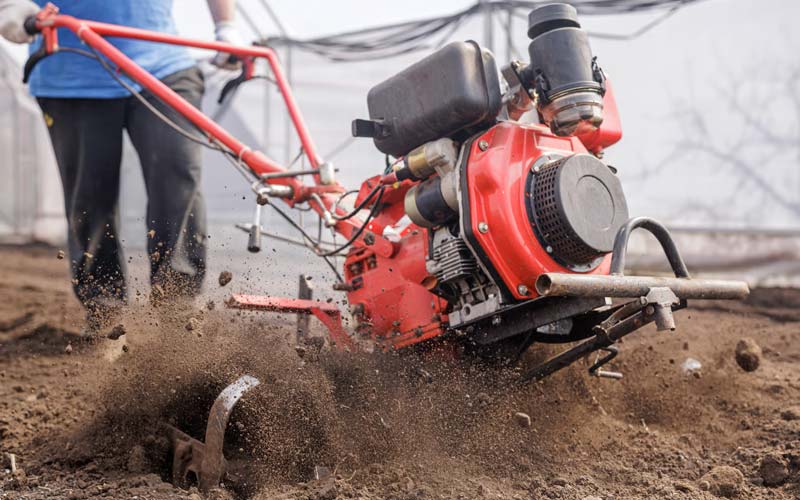
Separate bed preparation from between-row cultivation
List the operations the garden cultivator must perform. Preparing a new seedbed, incorporating a permitted amendment and cultivating between established rows require different working arrangements. A garden cultivator that is useful for initial bed preparation may be too wide or aggressive beside a growing crop.
Measure the actual working corridors, including crop spacing and the clearance needed to avoid roots, stems and irrigation lines. Record the shallowest disturbance that achieves the intended result. A garden cultivator should be selected for that operation rather than purchased on the assumption that maximum tillage depth is always beneficial.
Identify which tasks are better performed with a different implement or without powered cultivation. A compact machine can improve access, but repeated unnecessary passes consume time and disturb soil structure. Define a successful pass by its agronomic purpose and the quality of the finished bed, not by how finely the soil can be pulverized.
Measure bed access and turning space
Draw the bed layout with the entrance width, path width, headlands and any greenhouse doors. Include steps, thresholds, irrigation headers and storage access. A garden cultivator needs space for its working attachment and for the operator to control and turn the garden cultivator safely.
Compare the garden cultivator's full dimensions with the route to the bed. An adjustable handle can help working comfort, but it does not eliminate the need for turning clearance. Ask how the garden cultivator is moved between beds and whether transport wheels or other accessories are required in the proposed configuration.
Check the widest assembled condition and the width of any attachment stored or transported separately. If a removable component is needed to pass through a doorway, include that operation in the work cycle. A machine that fits only after lengthy disassembly may be a poor practical match for a site with frequent movement between protected growing areas.
Choose working width around the bed system
Working width affects coverage, maneuverability and the number of passes. Jinyuan's cultivator page lists an adjustable rotary working width of 80–100 centimeters for the described configuration. Confirm the exact attachment arrangement and adjustment method before choosing a garden cultivator for narrower beds or established crop rows.
A nominally wider machine does not automatically complete the task faster. Overlap, headland turns, obstacles and the operator's ability to maintain a controlled path affect productive output. Trial the garden cultivator in the actual layout or a clearly comparable test bed, and record the accepted width rather than assuming the catalog maximum will be used continuously.
Ask whether guards and shields remain appropriate through the adjustment range. Confirm what tools and components are needed to change width, how long the change takes and which configurations are approved. Record the complete attachment identification so a repeat order does not arrive with a different blade arrangement under the same general product name.
Match depth and soil condition to the intended operation
Soil moisture and texture influence the working result. Wet soil can smear and compact, while very dry or hard ground can make the garden cultivator difficult to control and reduce the quality of the pass. A garden cultivator trial should record soil conditions so that the result is interpreted correctly.
University of Minnesota Extension explains that wet soils are particularly susceptible to compaction and that intensive tillage can damage soil structure. Use those principles when deciding whether to cultivate on a particular day. The guidance does not establish a universal moisture threshold for every vegetable soil or a depth setting for a particular garden cultivator.
Set the working depth for the task and evaluate the resulting bed rather than repeatedly deepening the pass to pursue a finer appearance. Check for smearing, excessive pulverization, uneven depth and buried residues that interfere with planting. Keep permanent walking and traffic routes where the growing system permits, so that the cultivated area is not immediately compacted again.
Compare control, transmission and handling
Jinyuan describes its cultivator with a gasoline engine, gear transmission and forward and reverse gears. Ask for the exact model and control layout of the garden cultivator being quoted. The operator should be able to identify the stop control, drive engagement and direction selection clearly before a trial begins.
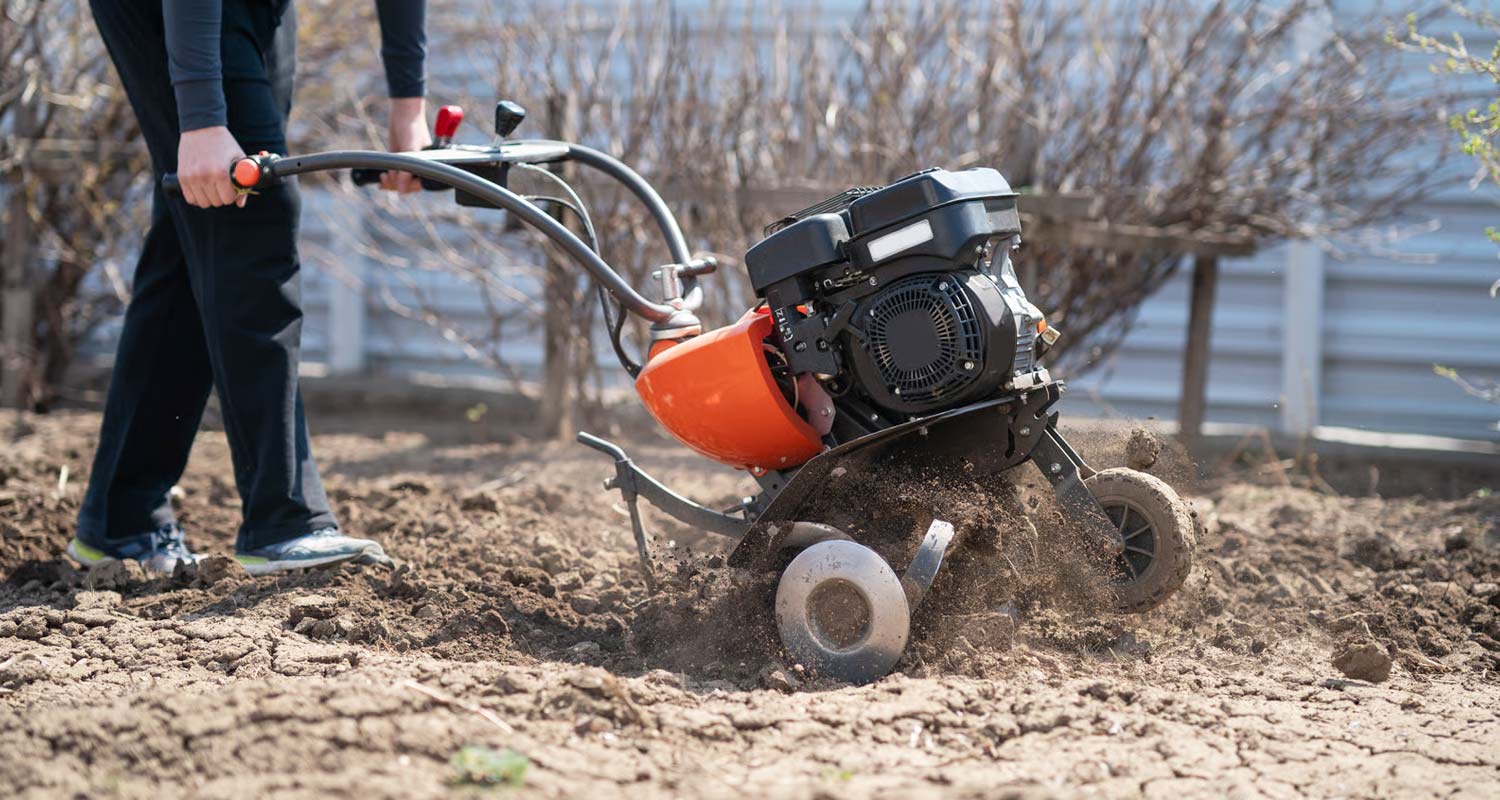
Evaluate the handle adjustment, vibration, balance and force needed to keep the garden cultivator on course. Perform turns and repositioning in representative space. A garden cultivator that is manageable in an open demonstration area may behave differently in a short bed with little room at either end.
Confirm the manufacturer's instructions for reversing and changing operating mode. Keep people away from the working attachment and never clear wrapped material while the garden cultivator can start or move. Ask how the attachment is isolated for inspection and which parts remain hot after operation. These are practical handover points that should be demonstrated with the exact supplied machine.
Compare configurations with a common trial
Choose a test bed long enough to observe consistent working behavior. Keep the task, soil condition and acceptance definition the same when comparing alternatives. A garden cultivator should be judged on the complete task, including setup, turns and cleanup, rather than on a short straight pass alone.
| Trial item | What to record | What the result helps decide |
|---|---|---|
| Access | Entrance, path and turning clearances | Whether the assembled machine fits the site |
| Working width | Actual accepted width and overlap | How many passes the bed requires |
| Soil finish | Depth consistency, clods and smearing | Whether the result suits the next crop operation |
| Control | Steering effort, balance and handle settings | Whether operators can work consistently |
| Workflow | Setup, working, turning and cleanup time | Real capacity during a working period |
| Attachments | Identification and approved adjustments | Whether repeat and spare orders will match |
Record why one setup was accepted. A garden cultivator demonstration can produce a different finish after a change in blade arrangement or depth control. Keep photographs of the tested attachment and its settings with the supplier's proposal. This is more useful than comparing only engine power and a broad “multifunctional” description.
Estimate capacity from a full working cycle
Measure productive time separately from turning, movement, refueling and cleaning. Theoretical coverage can be estimated from working width and travel speed, but actual output includes interruptions and overlapping passes. Use the garden cultivator trial to establish a representative complete-cycle result.
For example, a 0.8-meter accepted working width at 2 kilometers per hour corresponds to 1,600 square meters per hour before turns, overlap and interruptions. This is an arithmetic illustration, not a promised machine output. If a bed requires several passes, count the accepted finished area once rather than multiplying the area by every pass traveled.
Use the same definition when comparing costs. Fuel, operator time, routine service and replacement blades should be related to the completed cultivation task. A garden cultivator with a lower purchase price may require more handling time in a constrained layout. Conversely, a larger machine may add cost without providing useful capacity in short beds.
Prepare wear parts and off-season service
Ask for the blade, fastener, seal and transmission-service references appropriate to the delivered configuration. Wear parts should be identified by model and part number where available, not by approximate appearance. A garden cultivator may use different blades for different tasks, and an incorrect replacement can change balance or working behavior.
Follow the engine and transmission manuals for lubrication, inspection and storage. Record service by operating hours when the manufacturer specifies an hour-based interval. Clean soil from the machine using the approved method, and inspect for damaged guards, loose fasteners and wrapped material after isolation.
Plan a storage location and handling method before delivery. Keep the machine accessible for inspection and protect it according to the supplied instructions. Have the operator explain the startup, shutdown and storage routine during handover. This practical check can identify a missing manual, tool or service item while the supplier can still resolve it easily.
Send a bed-specific inquiry to Jinyuan
Provide bed and path dimensions, crop spacing, soil description, intended operations, desired working depth and the daily working window. Add photographs of headlands and access points. Ask Jinyuan to identify a garden cultivator configuration and attachment arrangement suitable for review against those details.
Request the exact model sheet, package list, operating manual, service information and a representative trial proposal. Include the destination and any transport restrictions. A quotation built around the actual bed system gives the buyer a clearer basis for selection than a general recommendation based only on farm area or engine size.
Review the garden cultivator product information and the Agricultural Machinery range, then send the application details for a configuration-specific quotation.
Frequently asked questions
Is the widest garden cultivator the fastest choice for vegetable beds?
Not necessarily. Bed width, overlap, turning space and operator control affect completed output. Compare machines on accepted finished area during a complete cycle, including setup and movement, rather than maximum working width alone.
Can one garden cultivator prepare beds and work between every crop row?
Only if its approved attachment arrangements and clearances suit both tasks. Measure crop spacing and consider root protection. Ask the supplier to confirm the intended operations and exact adjustable-width configuration.
Should a garden cultivator always work at its maximum depth?
No. Select depth for the agronomic task and soil condition. Unnecessary deep or repeated tillage can consume time and damage soil structure. Evaluate the bed finish and use suitable local agronomic advice where needed.
What should be included in a garden cultivator acceptance trial?
Check access, turning, actual width, depth consistency, soil finish, operator control and complete-cycle time. Record soil moisture and attachment settings so that the results can be compared and repeated.
What information helps Jinyuan propose a suitable garden cultivator?
Send bed, path and entrance dimensions, soil conditions, crop spacing, intended tasks and the operating window. Request a configuration-specific offer with attachment details, manuals, service references and trial conditions.