বিষয়বস্তুর সারণী
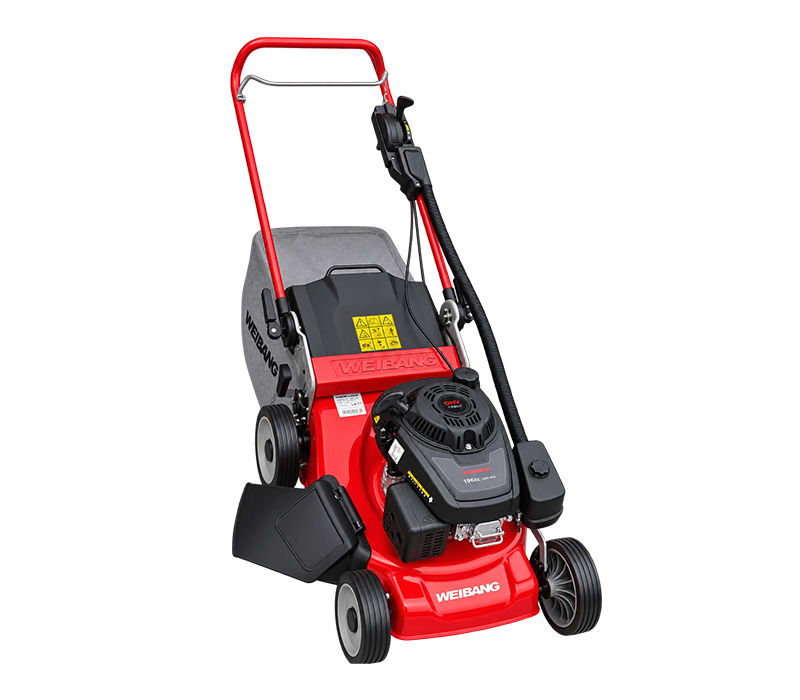
A self propelled lawn mower can reduce the effort of moving a self propelled lawn mower across a site, but travel assistance is only one part of commercial mowing productivity. Cutting width, access, grass condition, clipping handling and the time spent turning or emptying the bag all affect the completed result. A buyer should evaluate the mower against the actual grounds-maintenance route.
This guide focuses on selecting a self propelled lawn mower for managed factory grounds, parks and similar maintained grass areas. It differs from a general explanation of how lawn mowers work by concentrating on site fit, complete-cycle capacity and a representative acceptance trial. Rough vegetation, woody growth and steep terrain require a separate suitability assessment.
Map the mowing route and site constraints
Record the grass areas, entrances, narrow passages, obstacles, curbs and transport routes. Note where the operator must turn, stop or move between separate areas. A self propelled lawn mower with a useful cutting width in an open rectangle may spend much of its time maneuvering around trees and landscaped beds on another site.
Measure the narrowest access in the assembled working condition. Include the space needed for the operator and any grass collection attachment. Confirm how the self propelled lawn mower will move between sites or be loaded for transport. A folding handle can help storage, but it does not make every loading method suitable.
Identify slopes, uneven ground, drainage channels, stones and public access. Use the manufacturer's terrain limits and operating instructions to decide where the self propelled lawn mower can work. Do not infer a safe slope limit from the presence of powered wheels. Where a site contains unsuitable areas, include a different maintenance method in the plan rather than expecting one mower to handle every surface.
Distinguish maintained turf from rough vegetation
Describe grass type, typical height at cutting, density and the required appearance. Include the longest expected interval between visits. A self propelled lawn mower intended for regular lawn maintenance should not automatically be treated as a brush cutter or a machine for unmanaged field vegetation.
Jinyuan's lawn mower page describes a gasoline self-propelled model with a 510-millimeter cutting width, adjustable height and collection, mulching and side-discharge modes. Confirm the exact configuration and permitted application before purchase. The garden and lawn category also includes a different wide-cut machine, so do not combine their specifications into one self propelled lawn mower offer.
Choose a representative test area with the normal grass condition and relevant obstacles. If the trial uses freshly maintained grass but the commercial route includes much taller growth, the result may overstate practical output. Record the initial grass height and condition so that the demonstration can be compared with the buyer's routine work.
Match cutting height to the turf requirement
The suitable cutting height depends on turf species, climate, season and site management. University of Minnesota Extension's mowing guidance emphasizes sharp blades and suitable height for the lawns discussed in its regional advice. Apply the general principles carefully and obtain local turf guidance for the intended grounds.
Check whether the self propelled lawn mower can achieve the locally appropriate height range. Jinyuan lists a 25–75 millimeter range for the described model. A site that requires a higher maintained cut should not assume that the highest setting will be sufficient. Confirm the actual adjustment and the measured cut on representative ground.
Compare the finish across the test area, including wheel tracks, turns and uneven spots. Look for scalping, uncut strips, torn leaf tips and excessive clumps. A self propelled lawn mower should be accepted for the required finish rather than for a visually fast pass. If several passes are needed, include that time in the productivity record.
Evaluate travel assistance and operator control
Ask how travel speed is selected and how drive engagement behaves on the exact machine. The operator should be able to stop, turn and release the drive predictably. A self propelled lawn mower should be demonstrated with the people and route that represent the intended working conditions.
Check handle adjustment, control reach, turning effort and movement around obstacles. Consider the difference between an empty and a substantially filled collection bag. The self propelled lawn mower may feel different as weight distribution changes. Record any handling difficulty instead of assuming that powered travel removes all physical effort.
Confirm the manufacturer's instructions for changing mode, clearing debris and inspecting underneath the deck. Isolate the self propelled lawn mower as directed before approaching the blade or discharge path. Keep guards, covers and operator-presence controls functional. A commercial purchase should include practical training in these actions rather than relying solely on a brief engine-starting demonstration.
Compare collection, mulching and side discharge
Select clipping handling according to the site requirement. Collection can provide a clean visible finish but adds emptying and disposal time. Mulching and side discharge change how clippings return to the site. A self propelled lawn mower advertised with several modes should be supplied with all the components needed for the modes the buyer intends to use.
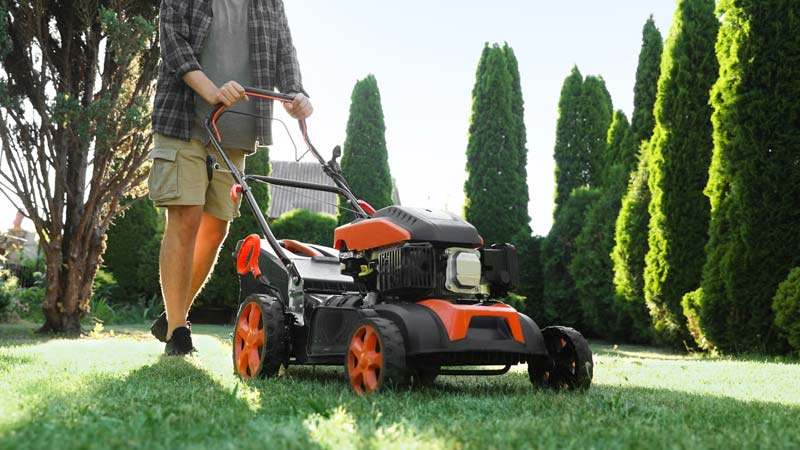
During the trial, assess bag filling, removal, emptying and refitting. Note where the operator will take the clippings and whether that route crosses active traffic or occupied areas. A self propelled lawn mower bag-capacity figure alone does not predict the number of interruptions because clipping volume changes with grass height and moisture.
For mulching or side discharge, inspect distribution and the resulting finish. Avoid treating large clumps as an acceptable result simply because collection has been avoided. Follow the self propelled lawn mower instructions on grass conditions and operating methods. Define the accepted clipping result before comparing the complete working time of different modes.
Use a complete-cycle comparison
Measure completed, acceptable area during a period that includes normal turns, obstacle handling and required bag emptying. Keep the initial grass condition and finish standard consistent. A self propelled lawn mower trial should make interruptions visible instead of reporting only the fastest straight-line cutting interval.
| Decision | Trial observation | Purchasing implication |
|---|---|---|
| Cutting width | Accepted swath after overlap | Determines useful coverage per pass |
| Travel assistance | Control through turns and obstacles | Shows whether drive assistance suits the route |
| Height adjustment | Actual finish on representative ground | Checks turf and appearance requirements |
| Collection | Fill, emptying and disposal cycle | Reveals handling time outside cutting |
| Mulching or discharge | Clipping distribution and clumping | Checks the accepted site finish |
| Transport | Loading, securing and storage arrangement | Determines movement between sites |
For illustration, a 0.51-meter width at 3 kilometers per hour gives a theoretical coverage of 1,530 square meters per hour before overlap, turns and interruptions. This is a calculation example, not a guaranteed self propelled lawn mower production rate. Report the measured accepted area separately and explain the site conditions behind it.
Compare cost per maintained area
Use fuel, operator time, blade service, routine maintenance, consumables, transport and clipping disposal in the same measurement period. A self propelled lawn mower should be compared on the cost of meeting the required finish at the required frequency. Purchase price and nominal engine power alone cannot establish that cost.
Record repeat passes and delays caused by unsuitable grass conditions or clogged discharge. Separate machine limitations from route-planning issues. Moving the clipping disposal point or revising the work sequence may improve productivity without changing the mower. Conversely, a machine that cannot achieve the required height or finish may remain unsuitable regardless of route changes.
For a fleet, keep identification and service records for each unit. Similar-looking mowers may have different blades, belts, wheel drives and control components. A self propelled lawn mower selected for repeated purchases should have a stable configuration and clear rules for approving substitutions before shipment.
Prepare blade service and maintenance
Request the operator manual, engine information, blade identification, fastening requirements and service instructions. Blade condition affects cut quality and vibration. Follow the manufacturer's sharpening, balancing and replacement guidance rather than improvising a repair based on the blade's appearance.
Inspect the deck, wheels, drive system, guards, collection components and controls as directed. Keep cleaning and service work separate from normal operation and isolate the self propelled lawn mower correctly. A self propelled lawn mower used on a busy route needs a repeatable inspection routine and a clear process for removing a defective machine from service.
Plan storage, fuel handling and seasonal service using the supplied instructions. Keep exact replacement references with the self propelled lawn mower record. A stocked spare is useful only if it matches the delivered configuration. Have the intended operator demonstrate the basic inspection and shutdown steps during handover so that missing instructions or tools can be resolved promptly.
Send a route-based inquiry to Jinyuan
Provide the maintained area, turf condition, desired cutting height, access widths, terrain, obstacles, clipping-handling requirement and operating frequency. Include the transport method and destination. Ask Jinyuan for a self propelled lawn mower configuration with a defined package and a representative acceptance trial.
Request the exact model sheet, supplied mode-conversion components, service references and training scope through the lawn mower product page or inquiry form. Explain any site areas that need separate equipment. A route-based specification makes the proposal easier to assess and gives operators a clearer starting point for consistent commercial maintenance.
Review the self propelled lawn mower product information and the ল্যান্ডস্কেপ এবং লন যন্ত্রপাতি range, then send the application details for a configuration-specific quotation.
Frequently asked questions
Does a self propelled lawn mower remove all operator effort?
No. Powered travel assists movement, while turning, obstacles, bag handling and transport still require effort. Trial the self propelled lawn mower on a representative route and assess control with the intended clipping arrangement.
Can a self propelled lawn mower cut rough brush?
Do not assume so. Confirm the approved vegetation, terrain and operating limits for the exact model. Maintained turf and unmanaged woody or field vegetation can require different cutting equipment.
Is maximum cutting width the best capacity measure?
Width contributes to theoretical coverage. Accepted area per complete working cycle is more useful because it includes overlap, turns, obstacles, emptying and any repeat passes needed to meet the finish standard.
What should be checked on a three-mode self propelled lawn mower?
Verify that collection, mulching and side-discharge components are included and fit correctly. Test the modes you intend to use and record clipping distribution, finish and handling time under representative grass conditions.
What helps Jinyuan propose a suitable self propelled lawn mower?
Send area, turf condition, required height, access, terrain, clipping method, work frequency and transport needs. Request the exact configuration, package, service references and a route-based trial proposal.