বিষয়বস্তুর সারণী
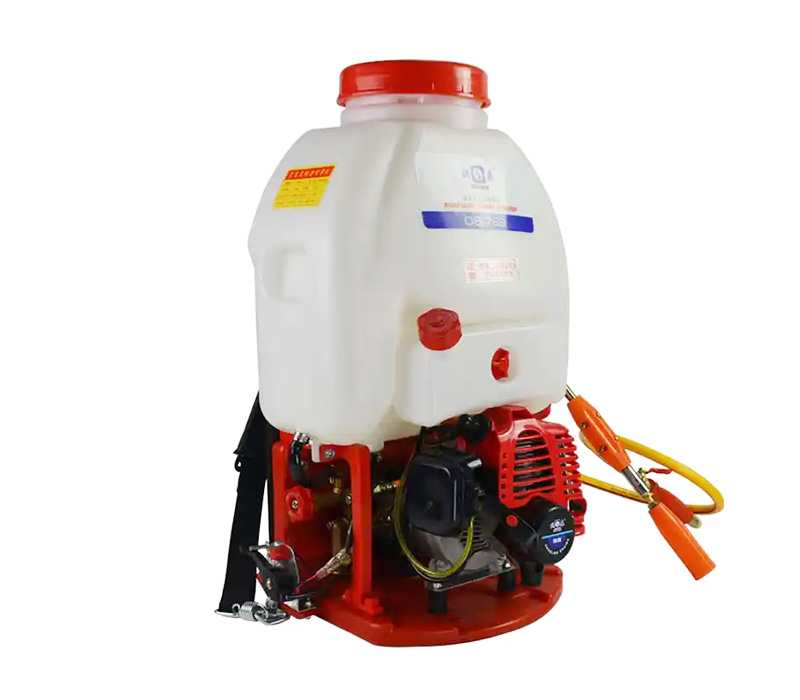
A backpack pesticide sprayer is useful where access is restricted, individual plants need attention, or a vehicle-mounted machine would spend more time turning than spraying. Buying one by tank capacity alone, however, leaves most of the application problem unresolved. The nozzle, operator, walking route and crop structure determine where the liquid goes. A practical equipment decision starts with the area to be treated and the delivery method permitted by the selected pesticide label.
For a commercial buyer, a backpack pesticide sprayer must also be manageable across a complete working cycle: filling, carrying, spraying, refilling and cleaning. A machine that looks convenient on a display stand may be awkward between closely spaced plants. A large tank can reduce filling stops while increasing the load that the operator carries. This guide explains how to turn those tradeoffs into a useful equipment inquiry and a repeatable clean-water evaluation.
Define what the backpack pesticide sprayer must reach
Separate broadcast, band and spot treatment before comparing hardware. Broadcast application covers a defined surface uniformly. A band treatment follows a narrower strip, such as a row zone. Spot treatment addresses selected plants or patches. These tasks require different ways of measuring treated area, and they can require different nozzle arrangements. An application rate calculated from the entire property can be misleading when only a fraction of that property receives spray.
Describe the crop in physical terms. Include typical plant height, row spacing, foliage density, bed width and access width. Note whether the intended target is low vegetation, an exposed upper surface or a location partly hidden by leaves. Do not assume that a visible wet outer canopy proves that an interior target has received the intended deposit. Reach and coverage should be assessed using an appropriate observation method before chemical application.
A backpack pesticide sprayer should be evaluated from the operator's actual working position. A long lance might reach a target but increase fatigue or cause the nozzle angle to change as the arm tires. An apparently wide spray pattern might be interrupted by leaves or by the operator's movement. Record the usable pattern at the intended nozzle height rather than relying on a pattern observed in open air at an unrelated distance.
Access conditions deserve their own line in the purchase brief. Uneven ground, steps, irrigation hoses and narrow gates affect how the operator moves with a filled tank. Include the longest uninterrupted route and the places where the tank can be refilled safely. If a route requires frequent climbing or difficult footing, reassess whether a carried machine is appropriate for that application before increasing tank size.
Choose the backpack pesticide sprayer delivery arrangement
The backpack pesticide sprayer pump supplies liquid; the nozzle turns that liquid into the pattern used for the task. Specify the nozzle type, operating pressure range and attachment arrangement together. Ask whether the quoted configuration includes the nozzle shown in the illustration, whether alternative tips fit the holder, and whether suitable filters are included. A nozzle photograph without a model reference is insufficient for repeat orders.
For a straight band, the buyer should establish the intended treated width and how the pattern will remain consistent along the row. For spot work, the buyer needs a repeatable way to judge each target and avoid treating the same patch twice. A swiveling nozzle or adjustable lance may improve access, but adjustment also introduces a variable that must be recorded. The operator should be able to return to the evaluated setting.
Do not choose a backpack pesticide sprayer on the assumption that maximum pressure produces the best result. Pressure affects nozzle flow and spray characteristics, while the target and pesticide label constrain the acceptable application method. Excess pressure may create an unsuitable spray or make the operator's technique difficult to maintain. Use nozzle information and the chemical label to establish the permitted configuration, then verify output with clean water.
Different power arrangements have different operational questions. For a manual pump, check whether the operator can maintain the intended pressure while walking and directing the lance. For a battery model, request the battery specification, charging requirements and supported working conditions. For an engine-driven version, assess starting, controls, vibration and the manufacturer's operating restrictions. These are configuration questions; a generic product name does not establish which arrangement is supplied.
Make carrying comfort part of the backpack pesticide sprayer trial
A full backpack pesticide sprayer includes the backpack pesticide sprayer's empty weight and the liquid load. For an approximate clean-water comparison, each additional liter adds about one kilogram of liquid. This is a planning relationship rather than a working-load recommendation. The acceptable load depends on the individual operator, route and task, and should be assessed through the employer's normal work procedures.
Evaluate the harness with clean water at a representative fill level. Check how the tank sits against the back, how the straps adjust and whether controls can be operated without twisting awkwardly. The operator should be able to set the backpack pesticide sprayer down and lift it using a suitable method. A favorable five-minute demonstration on flat ground does not establish comfort over an entire route with repeated starts and stops.
The backpack pesticide sprayer tank opening also affects daily usability. Ask whether filling can be observed clearly, whether the cap can be handled with the required protective equipment, and whether the opening accepts the intended filling method without splashing. Graduation marks should be readable from the position used during filling. If small batch volumes are important, establish how they will be measured accurately rather than relying on coarse tank markings.
Look for serviceable, identifiable parts around the operator interface. Straps, buckles, trigger components, seals and hoses can determine whether a machine remains useful after a minor failure. Request a parts diagram or another unambiguous identification method. If an importer plans to stock several configurations, distinguish common parts from model-specific items before placing a combined order.
Measure backpack pesticide sprayer output with clean water
Calibration connects measured delivery with treated area. The purpose is to find what the backpack pesticide sprayer actually delivers using the intended nozzle and operating technique. A clean-water test avoids introducing pesticide while the setup is still being adjusted. The selected pesticide label remains the authority for chemical rate, allowed uses, protective equipment and application restrictions.
Start by checking the assembled machine for leaks and confirming that the nozzle and filter are clean and correctly fitted. Prepare a measured test area that represents the intended application method. Practice the route at a sustainable pace before recording output. The test should include the same nozzle position and operating pressure that will be used during the task; otherwise the result describes a different setup.
Repeat the measurement sufficiently to understand whether the operator can reproduce it. Record the area, elapsed time and water used for each run. If output changes noticeably between runs, investigate the operating technique, pressure control and measurement method before averaging the results. An average can conceal a setup that is too inconsistent for the intended work.
Penn State Extension's backpack sprayer calibration guidance offers a useful additional explanation of measuring output under the intended operating conditions. Use such guidance to support a written calibration procedure, and keep the procedure with the backpack pesticide sprayer record. the backpack pesticide sprayer supplier can help identify components and settings; chemical-use decisions still follow the label and the locally applicable requirements.
Interpret a backpack pesticide sprayer clean-water calculation
Consider a hypothetical backpack pesticide sprayer trial covering 120 square meters with 2.4 liters of clean water. Dividing 2.4 by 120 gives 0.02 liters per square meter. Multiplying by 10,000 gives an equivalent carrier volume of 200 liters per hectare. This calculation describes the measured water delivery in that trial. It is not a pesticide dose, a recommendation for a particular crop, or a claimed performance figure for a Jinyuan model.
If the same treated area uses 3.0 liters during a repeat run, the equivalent becomes 250 liters per hectare. That difference warrants attention before chemical mixing. Possible causes include a slower pace, a changed spray width, different trigger timing or altered pressure. Investigate the cause using the recorded observations rather than attributing every difference to the backpack pesticide sprayer.
| Trial item | Hypothetical observation | What the buyer should establish |
|---|---|---|
| Measured treated area | 120 square meters | Width and length reflect the actual treatment pattern |
| Water consumed | 2.4 liters | Measurement excludes unrelated leakage or filling loss |
| Equivalent carrier volume | 200 liters per hectare | Calculation applies only to the tested setup |
| Repeat trial | 3.0 liters on the same area | Variation is investigated before chemical use |
| Equipment configuration | One recorded nozzle and setting | Replacement parts can reproduce that configuration |
The backpack pesticide sprayer tank size can then be considered against the measured carrier requirement. A hypothetical 12-liter usable fill at 200 liters per hectare represents 0.06 hectare of treated area before allowances for residual liquid and practical operating limits. This is an arithmetic planning example. Actual usable volume, treatment rate and acceptable filling practice must be established for the real machine and task.
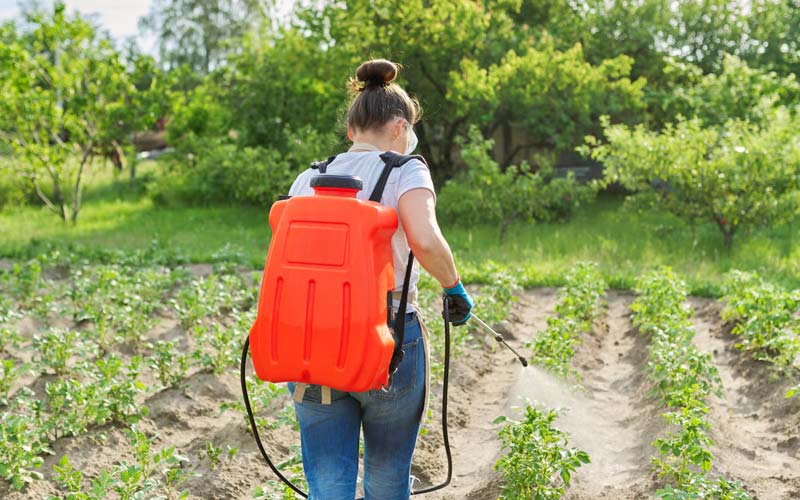
Do not use nominal tank capacity as a substitute for a route test. Residual liquid, slope, pickup arrangement and the operator's refill procedure affect how the last part of a batch behaves. Ask the supplier how usable capacity is defined and how the backpack pesticide sprayer should be emptied and cleaned. Plan refill points around a realistic working cycle rather than the theoretical maximum area.
Evaluate backpack pesticide sprayer canopy coverage
For a crop with substantial foliage, agree how coverage will be assessed before adjusting the backpack pesticide sprayer. A suitable water-sensitive observation method may help reveal distribution at selected locations, provided it is used and interpreted correctly. It shows aspects of spray distribution, not a guarantee of pest control. Sample locations should represent the actual target zones rather than only the easiest exposed leaves.
Observe several plants and positions along the route. An operator may start with a consistent nozzle distance and gradually change it as the tank becomes lighter or the terrain changes. Dense plants may require a different application method from open seedlings. If the intended target cannot be reached with a controlled and permitted technique, reconsider the backpack pesticide sprayer or application method with the appropriate adviser.
A backpack pesticide sprayer comparison should change one meaningful variable at a time during the clean-water evaluation. If nozzle, pressure, walking speed and lance position all change together, the buyer cannot tell which change improved distribution. Write down the original setup, the adjustment and the observed result. Retain the best supported configuration as the reference for operator instruction and future checks.
Weather and surroundings affect suitability, so the backpack pesticide sprayer trial should not become a shortcut around application restrictions. Follow the pesticide label and applicable local requirements for actual spraying conditions. Identify neighboring crops, public access and sensitive areas during planning. the backpack pesticide sprayer's ability to project liquid does not establish that a particular application is appropriate at a particular location or time.
Compare backpack pesticide sprayer supplier proposals
Request a configuration-specific quotation for the backpack pesticide sprayer. It should identify the drive arrangement, tank, nozzle, lance, hose, filters and included accessories. Ask for the empty weight and the definition of any stated capacity or output. If a quotation gives a flow value, establish the nozzle and operating conditions associated with that number.
For battery versions, confirm which battery and charger are included, the required electrical supply and how replacement batteries are identified. For manual versions, ask about the pumping mechanism and available repair parts. For engine-powered versions, request the engine identification and the relevant operating and maintenance instructions. Do not infer a component specification from a product photo that may illustrate another configuration.
The backpack pesticide sprayer material specification matters when selecting chemicals, but a broad claim such as corrosion resistant is not enough. Ask the supplier to identify relevant wetted materials and seals. Check compatibility against the actual product information and manufacturer's guidance. A written compatibility response should identify the proposed chemical and concentration conditions; it should not imply universal suitability for every agricultural mixture.
Agree on the contents of the spare-parts package. Useful discussions include nozzle tips, filters, seals, trigger components, straps and the means of identifying them. The appropriate package depends on the selected machine and maintenance capability. A box labeled miscellaneous accessories is difficult to manage when a specific replacement is needed during a busy application period.
Receive and document the backpack pesticide sprayer
At receipt, compare the delivered backpack pesticide sprayer against the accepted configuration before preparing any chemical mixture. Record the model identification, accessories and visible condition. Check the tank, cap, hose, fittings and harness using the manufacturer's instructions. Resolve missing parts or damage while the delivery record and packaging are still available.
Conduct a clean-water functional check and retain the results. Verify that the controls operate as described, that the selected nozzle fits, and that there are no leaks under the tested operating conditions. A functional check establishes the observed condition of the delivered machine; it does not replace a complete application calibration or validate chemical compatibility.
Keep a dedicated record for each backpack pesticide sprayer if several machines are used. Include the nozzle reference, calibration date, operator technique, measured output and relevant maintenance. Two machines with the same tank size can deliver different amounts because their nozzles or operating conditions differ. Shared records without machine identification make troubleshooting unnecessarily difficult.
Recheck output after changes that can affect delivery, including a nozzle replacement or a change in operating method. Clean and maintain the backpack pesticide sprayer according to its instructions and the chemical label. Do not clear a blocked nozzle by mouth or improvise a cleaning method that exposes the operator. Arrange chemical handling and wash-water management through the site's established procedures.
Prepare a focused backpack pesticide sprayer inquiry
To discuss a backpack pesticide sprayer with Jinyuan, send the crop or vegetation type, plant height, row arrangement and treatment method first. Add the access conditions, likely route length, refill arrangement and preferred power source. If a nozzle or application method has already been specified by an adviser or label requirement, include that information so the quotation can address it directly.
Request photographs of the proposed configuration, nozzle identification, a parts list and instructions covering operation and maintenance. Explain which clean-water checks will be used at receipt. For a distributor, include the desired spare-parts stock and packaging requirements. These details help distinguish the offered equipment from a general catalogue illustration.
Review Jinyuan's backpack pesticide sprayer product information alongside the agricultural spray category, then submit the application brief through the inquiry form below. A useful proposal connects the physical machine with an observable working method: manageable carrying load, reproducible delivery and access to the intended target. The final choice should be supported by a configuration-specific response and an application process that follows the chemical label.
Review the backpack pesticide sprayer product information and কৃষি স্প্রে range, then send the application and evidence requirements for a configuration-specific proposal.
Frequently asked questions
What should I specify first when buying a backpack pesticide sprayer?
Start with the treatment method, target vegetation and access conditions. Include plant height, row spacing, treated width and the intended nozzle arrangement. Tank size becomes easier to choose once measured carrier delivery and the refill route are understood.
Does a larger backpack pesticide sprayer tank always improve productivity?
A larger fill may reduce refill stops, but it increases the carried load and can change the operator’s pace. Evaluate the complete route with a representative clean-water load. Use an acceptable working method and realistic refill points when comparing tank capacities.
Can I use one backpack pesticide sprayer calibration result for every nozzle?
No. A calibration result applies to the tested configuration and operating method. A different nozzle, pressure, treated width or walking technique can change delivery. Record these variables and recheck output when a relevant change is made.
How should I compare advertised backpack pesticide sprayer output?
Ask which nozzle, pressure and test conditions produced the stated output. Compare proposals at the conditions relevant to your task, and confirm actual delivery using clean water. An isolated maximum-flow number does not establish uniform application or suitable coverage.
What information should accompany a backpack pesticide sprayer quotation request?
Send the crop and treatment method, access dimensions, preferred power source, nozzle requirements and refill plan. Ask for the exact configuration, empty weight, included accessories, instructions and spare-parts identification. Chemical compatibility and permitted use must be checked for the actual products and conditions.