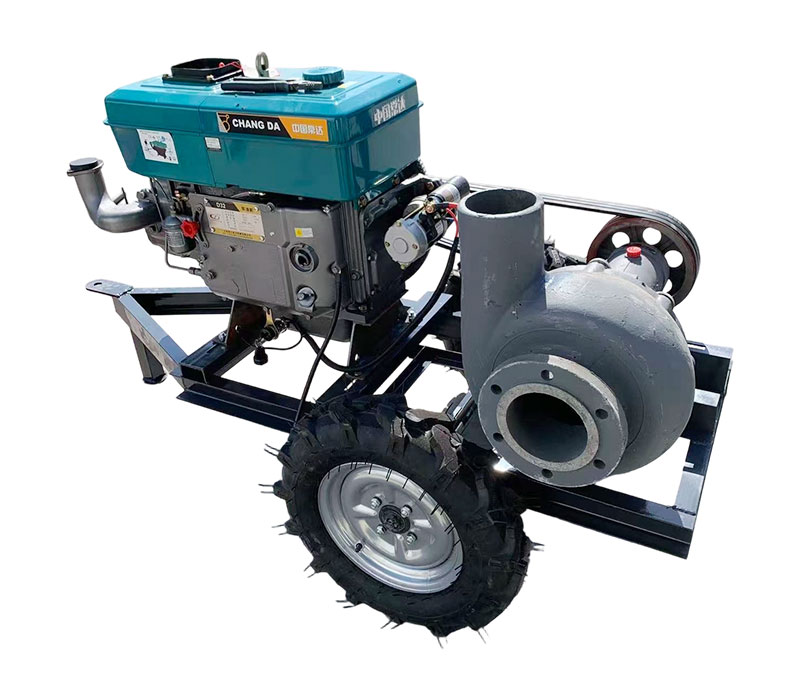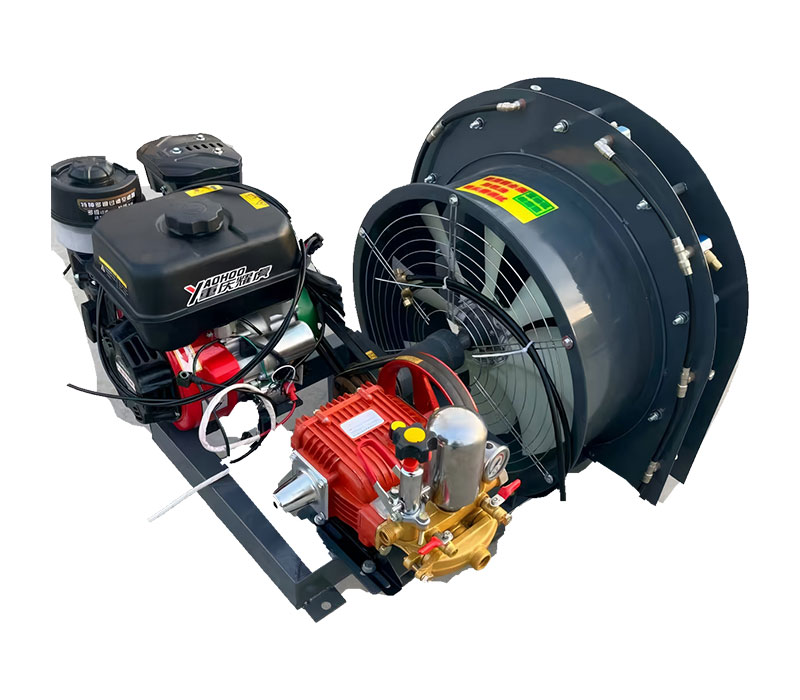
Table of Contents
A diesel sewage pump is usually purchased to move an inconvenient liquid from a difficult location. The temptation is to describe the job as a volume and a deadline, then choose the largest advertised outlet. That leaves unanswered questions about the liquid, the suction arrangement and the resistance of the discharge route. Those details determine whether a proposed machine can deliver the required flow in practice.
This guide helps buyers prepare a duty specification for a diesel sewage pump without confusing a general catalogue application with verified model capability. Jinyuan lists sewage pumping equipment within its water pumps and irrigation equipment range. The published category provides a starting point for an inquiry; the supplier still needs to confirm the exact diesel configuration, hydraulic performance and liquid compatibility for the proposed duty.
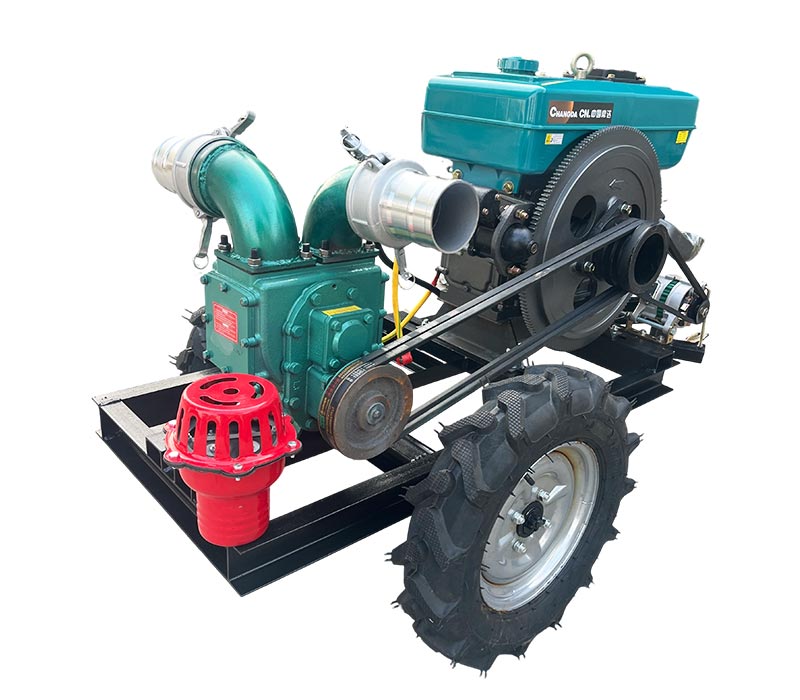
Describe the liquid before sizing the diesel sewage pump
Wastewater is a broad description. A drainage channel carrying rainwater and leaves differs from a tank containing fibrous waste, settled grit or a chemically aggressive liquid. Record the source, normal appearance, temperature and expected contaminants. Where necessary, obtain suitable characterization through qualified personnel. Avoid selecting a diesel sewage pump from an assumption that all liquids described as sewage behave the same way.
Solids have shape as well as size. A nominal passage dimension does not describe how a long strip, rag or bundle of fibers behaves inside a hydraulic passage. Request the manufacturer's explanation of the proposed solids-handling arrangement and the conditions associated with its stated capability. If the waste stream contains an uncertain mixture, identify that uncertainty explicitly rather than converting it into a falsely precise maximum particle size.
A diesel sewage pump offered for dirty-water transfer should not automatically be treated as a sludge or sand pump. Settled material may be much more concentrated than the liquid above it, and its behavior can change during a drawdown. Tell the supplier whether the intake will remain in relatively uniform liquid or encounter a concentrated layer toward the end of the job. A representative operating description is more useful than a convenient category label.
Material compatibility also deserves a separate response. Ask for the wetted materials, seal arrangement and limitations relevant to the actual liquid. A statement that a pump is durable does not establish compatibility with a particular industrial effluent. If the composition varies, describe the range and the available evidence. The final proposal should identify any conditions that remain outside the supplier's confirmed scope.
Establish diesel sewage pump flow from the job itself
For a planned transfer, define the volume that must be removed and the available time. If incoming flow continues during pumping, include it in the balance. A diesel sewage pump removing a stored volume must overcome ongoing inflow before it can reduce the level. State whether the quoted duty is normal operation, a short peak or a temporary emergency arrangement.
Consider a hypothetical collection basin with 90 cubic meters to remove in three hours while a steady 8 cubic meters per hour enters it. The average required discharge is 90 divided by 3, plus 8, giving 38 cubic meters per hour. This is a simplified planning example. It excludes changes in inflow, unusable residual volume and interruptions, and it is not a Jinyuan model rating.
The same arithmetic shows why the deadline matters. A discharge of 30 cubic meters per hour with 8 cubic meters per hour entering produces a net reduction of only 22 cubic meters per hour. Removing 90 cubic meters would then take about 4.1 hours under the stated assumptions. Buying from the stored volume alone would underestimate the required duty in this example.
A diesel sewage pump selection should also consider the smallest useful operating flow. Oversizing may create operational problems if the intake level falls quickly or the discharge arrangement cannot accept the flow. Ask the system designer to establish the operating range and any required controls. Describe when pumping must stop and what will happen if inflow changes significantly.
Build a head estimate for the diesel sewage pump
The diesel sewage pump must supply the head required by the system at the selected flow. Start with the elevation relationship between the source liquid surface and the discharge destination. Then include pressure requirements and losses in the pipework, hose, valves and fittings. Do not select from a maximum-head number as though it were available at the maximum-flow number printed elsewhere in a catalogue.
Give the supplier a route sketch with pipe or hose internal diameter, length, material and fittings. Identify reductions, partly closed valves and any equipment downstream that creates resistance. A long flexible hose may behave differently from a short straight pipe. The relevant diameter is the actual flow passage, and the route used for the final installation should match the route used in the calculation.
The source level can change while the diesel sewage pump operates. Record the starting level, lowest intended level and discharge destination level. The required head and suction conditions may differ at the end of a drawdown from those at the beginning. Request a selection covering the meaningful range instead of a single favorable condition.
For a hypothetical preliminary estimate, assume 7 meters of static elevation difference, 5 meters of calculated line loss at the required flow and no additional discharge pressure requirement. The resulting head is 12 meters at that flow. If line loss rises with a higher selected flow, the required head must be recalculated. These numbers illustrate the structure of a duty estimate; they do not establish a safe or sufficient design for an actual wastewater system.
Request the curve for the proposed diesel sewage pump
Ask for a performance curve identifying the exact hydraulic configuration and operating speed. Mark the required flow and total head on the same curve. The proposal should show how the selected diesel sewage pump reaches that point and where the expected operating range lies. An unmarked curve for another model does not support the selection.
Check the relationship between the curve and the offered engine. Request the engine identification, operating speed and the basis for matching available power with the hydraulic duty. The engine's maximum advertised power is not a direct measure of delivered liquid flow. Installation conditions and the manufacturer's operating limits must be considered when confirming the diesel sewage pump.
If the curve is based on clean water, ask what the supplier has considered for the actual liquid properties. Do not invent a universal correction factor for every sewage stream. Density, viscosity, entrained gas and solids can affect the application differently. The buyer should obtain a configuration-specific explanation and identify any testing needed to resolve uncertainty.
The Hydraulic Institute's wastewater pump selection overview provides useful context for why solids-handling arrangements matter in wastewater applications. Use that resource as background for the technical conversation, while obtaining the actual curve and limitations from the supplier of the proposed machine. General industry guidance is not a certification of a particular diesel sewage pump.
Treat diesel sewage pump suction conditions separately
A surface-mounted diesel sewage pump requires an intake arrangement that the selected model can support. Record the vertical relationship between the diesel sewage pump and liquid surface, the suction-line length and diameter, and the fittings. Tell the supplier whether the line will remain flooded or require priming. A discharge-head calculation alone cannot establish that the inlet conditions are acceptable.
Ask whether the proposed diesel sewage pump is self-priming and what that description means for the offered configuration. Confirm the required initial preparation, permitted suction arrangement and expected limitations. A self-priming claim does not mean the diesel sewage pump may run dry indefinitely or recover from any air leak. Use the manufacturer's instructions for priming and operation.
Locate the intake so that the planned lowest liquid level and the surrounding flow conditions are considered. An intake that draws air or sits against a surface may behave differently from the arrangement used in a demonstration. Avoid improvising entry into tanks, pits or other hazardous spaces to reposition it. Such work needs the site's established procedures and appropriately qualified personnel.
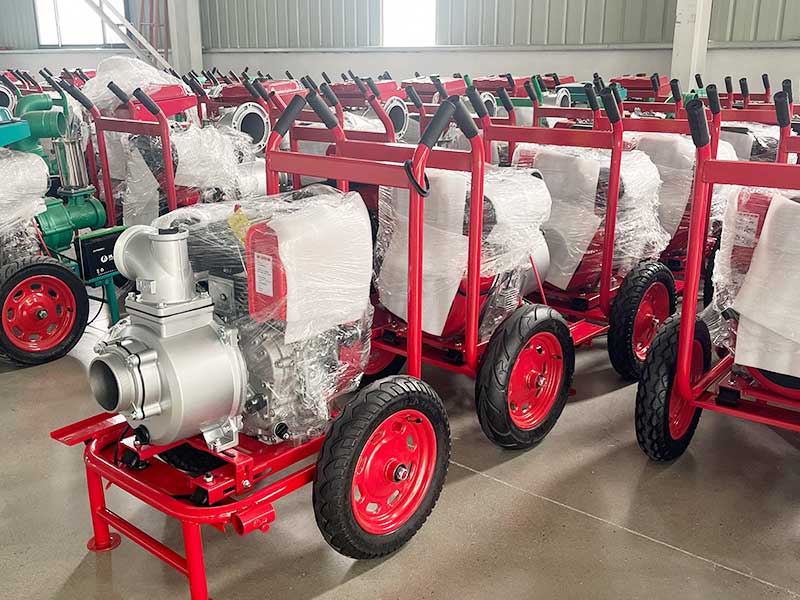
Discuss screening carefully. An intake screen may exclude certain debris while adding resistance and creating a cleaning requirement. A fine screen chosen without considering the waste stream can become the limiting component. Ask the designer and supplier to specify the intake arrangement, access for servicing and the conditions under which operation should be stopped.
Compare complete diesel sewage pump proposals
| Proposal item | Evidence to request | Decision it supports |
|---|---|---|
| Hydraulic model and speed | Identified performance curve | Required flow and head are checked together |
| Waste stream | Written liquid and solids description | Offered arrangement matches the actual medium |
| Suction assembly | Layout, dimensions and priming instructions | Intake conditions are considered separately |
| Engine package | Engine identification and operating basis | Drive matches the proposed hydraulic duty |
| Discharge route | Diameter, length, fittings and destination | Resistance calculation reflects the installation |
| Service provisions | Parts identification and access requirements | Routine maintenance can be planned |
A diesel sewage pump quotation should distinguish included equipment from buyer-supplied items. List suction and discharge hoses, couplings, strainers, valves, starting equipment and the mounting arrangement. Confirm connection dimensions and standards. Two packages with the same nominal outlet can require different installation purchases before either can operate.
Request package dimensions and mass for transport planning. Identify lifting points and the manufacturer's handling instructions. If the diesel sewage pump is moved repeatedly between sites, discuss the frame or trailer arrangement and any restrictions on movement. Portability in a product description does not establish suitability for every transport method or terrain.
Fuel planning should use operating information relevant to the selected engine and duty. Ask how any stated consumption was measured and whether it represents the expected load. Include refueling arrangements and interruptions in the operating plan. A theoretical tank endurance figure is less useful than a documented working cycle supported by the proposed engine information.
Service support can determine how quickly a diesel sewage pump returns to work after a problem. Request identification for seals, wear components, filters and engine service parts. Ask which components the buyer may maintain under the supplied instructions and which need specialist service. Clarify spare-part lead times before relying on the diesel sewage pump for a time-sensitive duty.
Agree diesel sewage pump acceptance evidence
Define the purpose of the acceptance test. A clean-water factory test can document certain hydraulic and functional observations, but it does not reproduce every wastewater condition. A diesel sewage pump proposal should state the test medium, measurement arrangement, speed and reported parameters. Agree how the results will be compared with the accepted specification.
Where a material-specific trial is necessary, arrange a suitable procedure and define the sample's representativeness. Avoid a vague request to test dirty water without describing what the result needs to establish. Document limitations such as differences in solids concentration, suction layout or operating duration. The test record should support the decision rather than imply broader validation than the test provides.
At receipt, verify the diesel sewage pump model, engine, accessories and visible condition against the accepted order. Check instructions and parts identification before installation. Retain photographs and delivery records. Installation and commissioning should follow the manufacturer's instructions and the requirements established by the system designer.
During commissioning, record the actual arrangement and relevant measurements using suitable instruments. Compare observed behavior with the accepted duty and investigate differences before declaring the job successful. A rapidly falling liquid level is not a substitute for a flow measurement when inflow and basin geometry are uncertain. Keep the operating record with the diesel sewage pump's service history.
Send Jinyuan a diesel sewage pump duty specification
For a useful diesel sewage pump inquiry, provide the waste source and known liquid properties, required transfer volume, ongoing inflow and available pumping time. Add a route sketch, source-level range and discharge destination. Identify the preferred diesel configuration and any limits on dimensions, transport or starting arrangements.
Ask Jinyuan to respond with the exact model, matched engine, performance curve, liquid limitations, included accessories and test proposal. If important liquid data is missing, mark it as unresolved and agree how to obtain it. This produces a clearer purchasing decision than requesting the biggest machine and hoping the installation will suit it.
Review the sewage pump product information and water pumps and irrigation equipment category, then use the inquiry form to share the application details. A well-selected diesel sewage pump is supported by an identifiable duty, an appropriate intake arrangement and evidence tied to the actual configuration. Those elements give the buyer a practical basis for comparing price, capability and operating responsibility.
Review the diesel sewage pump product information and Water Pumps And Irrigation Equipment range, then send the application and evidence requirements for a configuration-specific proposal.
Frequently asked questions
How do I calculate the flow required from a diesel sewage pump?
For a simplified planned drawdown, divide the volume to be removed by the available pumping time and add ongoing inflow. Real selections must also consider changing inflow, interruptions, residual volume and the acceptable operating range. Provide those conditions to the supplier and system designer.
Can I choose a diesel sewage pump using outlet diameter alone?
No. Outlet diameter does not establish flow at the required head, solids-handling suitability or acceptable suction conditions. Request the exact model’s curve, liquid limitations and proposed intake arrangement, and evaluate them against the installation.
Does a sewage pump automatically handle concentrated sludge?
No. Concentrated sludge, abrasive grit and fibrous material can require different arrangements. Describe the actual liquid and how it changes during pumping. Obtain written confirmation for the proposed configuration rather than extending a general sewage application claim to every waste stream.
What should a diesel sewage pump factory test demonstrate?
Agree the medium, operating speed, measurements and acceptance basis before dispatch. A clean-water test can document hydraulic or functional observations under stated conditions, but it does not validate every wastewater composition. Material-specific uncertainties may require an appropriately defined additional trial.
What should I send with a Jinyuan diesel sewage pump quotation request?
Include the waste description, transfer volume, deadline, inflow, source-level range and discharge route. Request the matched engine, identified curve, priming requirements, accessories, service parts and test evidence. State clearly which application details remain uncertain.