Table of Contents
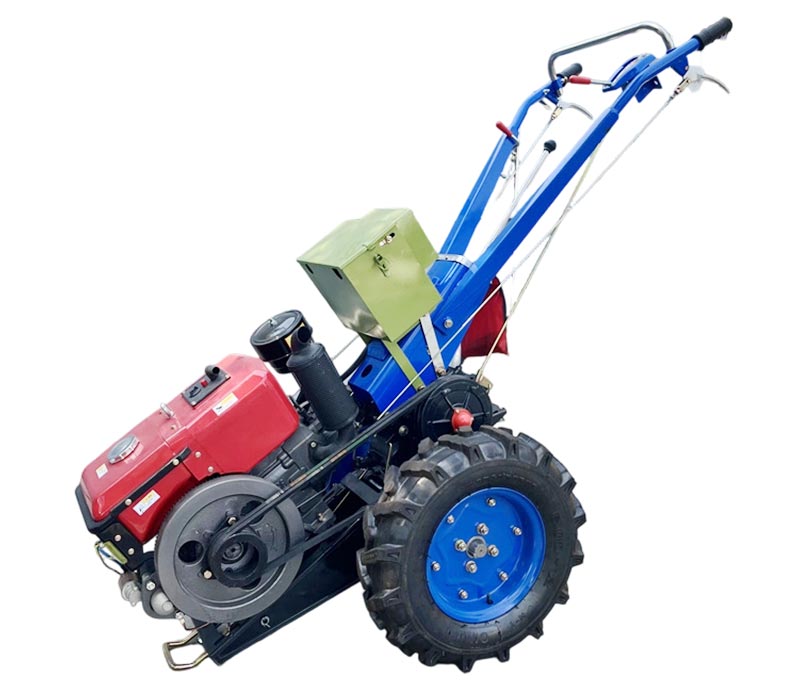
A diesel walking tractor can support several field operations, but its usefulness depends on the implement and the space available to use it. A wide attachment may cover more ground in one pass while creating problems at gates, between beds or at the end of a row. The right purchase starts with a field layout and a defined task rather than an engine-power comparison alone.
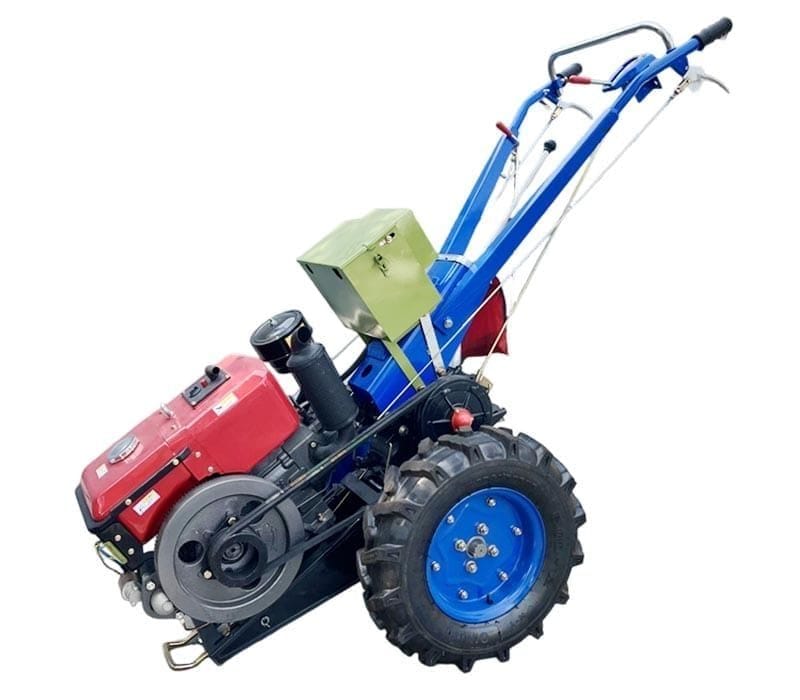
Jinyuan's walking tractor listing describes a diesel-powered two-wheel machine and several possible implement applications. Buyers should request the actual dimensions and compatibility of the proposed attachment package. This guide explains how to connect diesel walking tractor working width with bed geometry, turning space, soil conditions and a realistic operating schedule.
Map the space available to a diesel walking tractor
Measure the route from storage to the field as well as the work area itself. Include doorways, gates, bridges and narrow paths. Record the narrowest clearance with the proposed attachment fitted. A machine that fits a field may still require attachment removal to pass through its access route, adding handling time to every working day.
Distinguish overall width, wheel track and implement working width. Overall width determines physical clearance. Wheel track describes the relationship between the wheels and affects where they run relative to the crop or bed. Working width describes the area treated in a pass. These dimensions answer different questions and should appear separately in a diesel walking tractor quotation.
Measure beds and paths at several locations. A nominal bed width may vary where the field edge curves or irrigation fittings intrude. Note crops, posts and other objects that the operator must avoid. Base the diesel walking tractor decision on the usable route, including necessary clearance, rather than the largest dimension found in an open part of the field.
Include headland length in the layout. The operator needs room to complete the planned maneuver with the selected implement. A drawing should show the start and end of each pass, the turning route and any place requiring reversal. Confirm the proposed operating method against the manufacturer's instructions before using it to estimate capacity.
Match diesel walking tractor width to the operation
For full-width bed preparation, identify how many passes are needed to treat the bed consistently. An attachment slightly narrower than the intended treated area may require an extra pass. A wider attachment may intrude into a path or neighboring crop. Ask the supplier to confirm the usable working width, adjustment options and any operating conditions associated with the stated dimension.
For inter-row work, the available crop clearance constrains the diesel walking tractor package. Consider the wheels, attachment, guards and the operator's position. Plants grow into the route as the season progresses, so access measured before planting may not represent later operations. Describe the crop stage at which the diesel walking tractor will be used.
A plow, rotary tiller and seeder do not have interchangeable width requirements. Each tool performs a different operation and can impose different loads or positioning requirements. Request implement-specific information rather than treating the tractor's ability to accept several tools as proof that each will suit the same layout.
For transport duties, assess the complete tractor-and-trailer arrangement separately. Required clearances, handling, braking and operating restrictions differ from soil-working tasks. Do not use a successful tillage demonstration to validate a transport application. Ask for the manufacturer's approved configuration and instructions for each intended operation.
Understand diesel walking tractor attachment compatibility
Specify the exact attachment models to be included. Ask how each connects, whether adapters are required, and which components remain on the diesel walking tractor during a changeover. Photographs of the connection area and a configuration list help resolve ambiguity. A catalogue showing many implements does not establish that every item is supplied in a quoted package.
Where an implement receives powered drive, confirm the connection, direction of rotation, speed requirements and guarding arrangement. A similar-looking coupling is not sufficient evidence of compatibility. The supplier should identify the approved combination and the instructions for connecting and disconnecting it. These details matter particularly when buying tractor and implements from different sources.
Ask whether the diesel walking tractor wheel arrangement changes between operations. Track adjustment, alternative wheels or other approved setup changes can affect clearance, traction and changeover time. Include the required parts in the quotation and determine how adjustments will be made under the manufacturer's instructions.
Compare complete packages rather than base machines. One offer may include a rotary attachment, connection hardware and suitable wheels, while another includes only the power unit. Record the delivered configuration for each offer before comparing price. Otherwise a lower initial price can conceal the additional purchases needed to perform the intended work.
Relate diesel walking tractor capacity to soil conditions
The working width that looks efficient on paper may be unsuitable for the intended depth or soil condition. Tell the supplier about soil texture, previous cultivation, residue and the desired operation. If relevant conditions are uncertain, arrange a representative field demonstration or obtain appropriate local advice. Do not turn a nominal engine rating into a guaranteed width-and-depth capability.
Depth affects the operation as well as the load. Establish the agronomic purpose of the pass before selecting a depth setting. Repeated passes made only to improve appearance can consume time and disturb more soil than intended. the diesel walking tractor decision should support the crop-management plan rather than determine it by default.
Traction can limit useful progress even when the engine continues running. Ask how the proposed diesel walking tractor package is configured for the intended ground conditions. Any ballast or wheel changes must follow the manufacturer's approved arrangement. Avoid assuming that more weight or a different wheel automatically improves every operation.
Observe the quality of the completed work during a demonstration. Record treated width, effective depth where appropriate, consistency and missed areas, together with the diesel walking tractor setting and conditions. A fast pass that fails the agreed task is not useful capacity. Agree the acceptance observations before comparing timed results.
Calculate diesel walking tractor field capacity realistically
For a simple planning estimate, theoretical area capacity in hectares per hour equals working width in meters multiplied by forward speed in kilometers per hour, divided by ten. This describes uninterrupted full-width travel. It excludes turning, overlap, adjustment, access travel and other delays, so it should not be presented as achieved daily output.
Consider a hypothetical diesel walking tractor attachment with a 0.8-meter working width traveling at 2.0 kilometers per hour. The theoretical capacity is 0.16 hectare per hour. If an assumed field efficiency of 60 percent is used for illustration, estimated effective capacity becomes 0.096 hectare per hour. The efficiency value is an assumption, not a measured Jinyuan performance claim.
Under those assumptions, a 0.48-hectare task would require approximately five hours of field operation. Preparation, transport, cleaning and maintenance may add further time. A buyer should replace the assumed efficiency with observations from a comparable layout and operation before committing to a production schedule.
| Planning factor | Hypothetical value | Meaning for the decision |
|---|---|---|
| Attachment working width | 0.8 meter | Treated width of one pass |
| Forward speed | 2.0 kilometers per hour | Assumed travel speed during the task |
| Theoretical capacity | 0.16 hectare per hour | Continuous travel without delays |
| Assumed field efficiency | 60 percent | Illustrative allowance for field losses |
| Estimated effective capacity | 0.096 hectare per hour | Planning result under these assumptions |
A wider diesel walking tractor attachment does not necessarily reduce total time in proportion to width. Extra turning difficulty, narrower access or an additional setup change can reduce the benefit. Compare the entire job, including the number of passes needed for each bed and the route between work areas.
Test diesel walking tractor turning and changeover time
A field trial should include the end of a pass, not just straight-line travel. Use a representative headland and the approved operating method. Observe whether the operator can complete the maneuver comfortably and maintain control of the diesel walking tractor and attachment. Record any route changes required by the proposed package.
Time an implement changeover under the manufacturer's procedure if several operations are planned in the same day. Include positioning, connection, checking and any wheel or track adjustment. Do not base a labor plan on a demonstration in which another person has already prepared the attachment and removed all necessary parts.
The diesel walking tractor operator also needs appropriate instruction for each configuration. Control familiarity with one implement does not establish competence with another. Confirm that the supplied documentation identifies controls, approved settings and relevant restrictions. Arrange training and work procedures through the buyer's normal equipment-management process.
Machine guarding is a practical purchase requirement. OSHA's machine guarding overview provides general background on hazards from moving machinery; it does not certify a model or determine every rule applicable to a buyer's location. Obtain the actual guards and instructions for the offered tractor-and-implement combination, and retain them throughout use.
Specify the diesel walking tractor delivery package
Ask Jinyuan for the proposed tractor model, engine identification, starting arrangement, dimensions and mass. The public listing describes a diesel configuration with multiple gears and an adjustable track, but the accepted quotation should confirm the exact machine being supplied. Request the settings and dimensions relevant to the selected implement rather than inferring them from a general specification table.
List each included implement, connection component, wheel set and service item. Include packing dimensions if transport or warehouse access is constrained. For a distributor, request a clear method of identifying replacement components across the models ordered. A useful packing list allows the receiving team to check the diesel walking tractor without guessing which loose items belong together.
Ask which routine service tasks are covered by the supplied instructions and what tools or consumables they require. Discuss engine-service parts, filters and implement wear components with reference to the actual configuration. A maintenance plan should support the expected workload and the buyer's available service capability.
Confirm the basis of any performance statement included in the proposal. A diesel walking tractor capacity figure should identify the attachment, soil condition, working depth and measurement method where relevant. If a field demonstration cannot reproduce the buyer's conditions, record its limitations and determine what additional evidence is needed.
Prepare a field-based diesel walking tractor inquiry
Send a simple field drawing showing bed width, path width, row length, access restrictions and headland space. State the intended operations, soil conditions and desired implement package. Include the area to complete and the working window so that time estimates can be discussed with their assumptions visible.
Request a configuration-specific response covering compatibility, dimensions, approved setup changes and delivery contents. For a diesel walking tractor used across several plots, include the route and transport arrangement between them. This lets the supplier address the whole working system rather than only the straight-line pass.
Review Jinyuan's walking tractor product information and agricultural machinery range, then share the field layout through the inquiry form. Working width is a useful starting dimension, but a purchase becomes practical only when the diesel walking tractor fits the access route, the implement completes the required task and the operating cycle fits the available time.
Review the diesel walking tractor product information and Agricultural Machinery range, then send the application and evidence requirements for a configuration-specific proposal.
Frequently asked questions
What width should I choose for a diesel walking tractor?
Choose the implement width against bed or row geometry, access clearance, headland space and the intended operation. Request separate values for overall width, wheel track and usable working width. Confirm the proposed configuration in a representative layout before relying on it for a time-critical task.
Is engine power enough to compare diesel walking tractor packages?
No. Implement compatibility, traction, soil condition, working depth, maneuvering and changeover time affect useful capacity. Compare complete tractor-and-implement packages, and request evidence tied to the actual operation rather than an isolated engine rating.
How can I estimate diesel walking tractor area capacity?
Multiply working width in meters by forward speed in kilometers per hour and divide by ten for theoretical hectares per hour. Then account for overlap, turning and other losses using justified observations or clearly labeled assumptions. Add preparation and transport time separately when planning a working day.
Can one diesel walking tractor perform every listed implement task?
A broad application list does not establish compatibility of every implement or suitability for every field. Request the exact approved attachment, connection, drive requirements and setup for each task. Evaluate transport applications separately from soil-working operations.
What information should accompany a Jinyuan diesel walking tractor inquiry?
Provide field dimensions, access restrictions, headland space, soil conditions, intended operations and the area to complete. List preferred implements and ask for a configuration-specific quotation with dimensions, included components, instructions, service parts and suitable demonstration evidence.