Table of Contents
A stainless steel vibrating sieve should be selected for a separation result, not simply for a polished appearance or a mesh number. The material's particle distribution, moisture, shape and feeding behavior influence what the stainless steel vibrating sieve can achieve. A representative sample trial helps the buyer connect the proposed equipment with accepted product and rejected fractions.
Jinyuan offers screening equipment including a stainless steel vibrating sieve application. Before choosing a configuration, define the material and the required separation, then request an identified machine and screen arrangement. This guide explains how to build a sample-based evaluation that produces useful evidence for purchasing and commissioning.
Define the stainless steel vibrating sieve separation objective
Distinguish removing oversized contamination, recovering an undersize product and separating several saleable grades. Each objective creates a different way to judge the output. Write down which discharge is the accepted product and what limits apply to misplaced particles. A machine can appear busy while failing the buyer's actual separation requirement.
Describe the feed as it normally arrives. Include particle-size information, moisture range, shape, tendency to clump and any relevant temperature conditions. If the feed varies between batches, identify the difficult routine material as well as the typical material. The stainless steel vibrating sieve proposal should state which part of that range it supports.
Do not assume a screen opening alone determines every particle's destination. Elongated particles, agglomerates and changes in how material reaches the screen can affect the result. Ask the supplier to explain the proposed arrangement and demonstrate its performance on a representative sample rather than relying on an isolated nominal mesh designation.
Prepare a representative stainless steel vibrating sieve sample
Agree how much sample is needed and how it will be collected, packed and identified. A convenient scoop from one exposed part of a pile may not represent the full feed. Use a sampling method suitable for the material and the decision, and document where and when the sample was obtained.
Keep the sample's condition relevant to the expected process. If it dries, absorbs moisture or separates during transport, the trial may describe a different feed. Tell the supplier about known handling sensitivity and agree how the material will be prepared before the stainless steel vibrating sieve test. Record any conditioning performed at the test site.
For a variable feed, consider separate identified samples rather than blending everything into an average that conceals difficult conditions. The appropriate test plan depends on the production range. Make clear whether a trial is exploratory or intended to support an acceptance commitment before the results are interpreted commercially.
Specify stainless steel vibrating sieve screen details
Request the actual aperture and screen-medium specification, including the units and identification method. Mesh terminology can be incomplete when different conventions or wire dimensions are involved. Obtain an unambiguous reference that can be used to order replacements and reproduce the tested arrangement.
Identify the number of decks and the purpose of each deck. Ask how material moves between the inlet, screens and outlets, and how each fraction is collected. A multi-deck stainless steel vibrating sieve should have a clear flow diagram so the receiving team can distinguish product grades and waste without relying on outlet position alone.
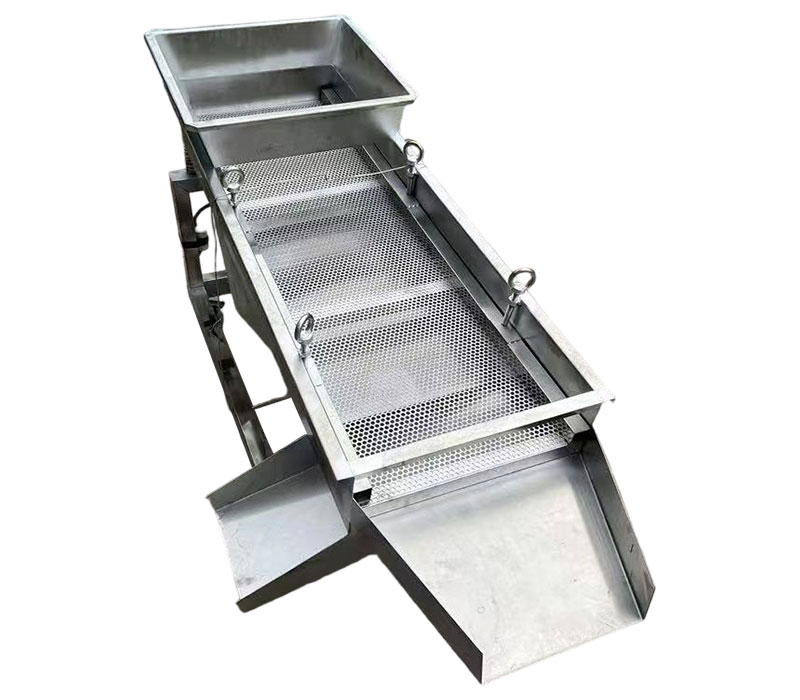
Confirm the actual machine geometry and motion described in the quotation. Rectangular and circular machines can use different layouts and operating arrangements. Request a dimensioned drawing and photographs of the offered model. A broad product-family name should not substitute for identification of the stainless steel vibrating sieve used in the trial and supplied in the order.
Define stainless steel vibrating sieve trial measurements
Agree the input mass, trial duration and masses of the collected fractions. Include material remaining inside the machine and any other relevant loss in the mass balance. Weighing only the attractive accepted fraction leaves unanswered questions about recovery, rejection and unaccounted material.
Use a suitable method to assess the particle distribution of each relevant fraction. ISO's test-sieving methods page identifies a standard dealing with methods using specified types of test sieves. It provides a reference point for discussing an agreed analytical procedure; it does not certify a production stainless steel vibrating sieve or determine the acceptance limits for the buyer's product.
Record how samples of each fraction are taken. A hand-selected portion from one point may conceal variation during the run. The method should let the buyer connect analytical results with the reported production masses and the actual machine settings. Keep retained samples where useful for reviewing an unexpected result.
Interpret stainless steel vibrating sieve recovery correctly
Consider a hypothetical trial with 100 kilograms of input, 82 kilograms in the designated product fraction, 15 kilograms in a reject fraction and 3 kilograms retained or otherwise accounted for. The product mass yield is 82 percent of input. This calculation does not establish product purity or the recovery of a specific desired particle class.
If laboratory analysis shows that 80 kilograms of the original feed belongs to the desired class and 76 kilograms of that class appears in the accepted product, its recovery is 95 percent. Product purity would use a different denominator: the accepted product mass. These are illustrative definitions, not performance claims for a Jinyuan stainless steel vibrating sieve.
| Trial term | Illustrative measurement basis | Question answered |
|---|---|---|
| Product mass yield | Accepted fraction divided by input | How much total feed becomes product? |
| Desired-class recovery | Desired material in product divided by desired material in feed | How much wanted material is recovered? |
| Product purity | Desired material divided by accepted product mass | How much of the product meets the defined class? |
| Mass balance | All fractions, retained material and losses | Is the trial accounting complete enough to interpret? |
Agree terminology before comparing offers. A supplier's separation efficiency statement may use a different definition from the buyer's recovery requirement. Ask for the underlying masses and analytical method so the result can be evaluated without guessing what a percentage represents.
Relate stainless steel vibrating sieve rate to separation quality
The proposed feed rate should be assessed with the agreed separation result. Increasing the amount fed to the screen may change distribution and residence behavior. A headline kilograms-per-hour figure is incomplete unless the sample, screen arrangement and achieved output quality are identified alongside it.
Use a controlled, representative feeding arrangement during the trial. Intermittent dumping can produce a different result from steady feeding. If upstream equipment will determine the feed pattern, include that condition in the stainless steel vibrating sieve proposal. The receiving process should be able to reproduce the arrangement on which the accepted rate is based.
Record interruptions and observations such as screen blinding or uneven distribution. A short favorable run may not reveal a problem that develops over time. Agree an appropriate duration and observation method for the material and purchase decision. If the sample quantity limits the trial, state that limitation rather than implying longer-term validation.
Confirm stainless steel vibrating sieve construction and access
Identify which components contact the material and request the specified materials for those components. A stainless exterior does not establish the material of every internal part, gasket or screen. If documentation or traceability is required by the buyer's process, include it explicitly in the purchasing brief.
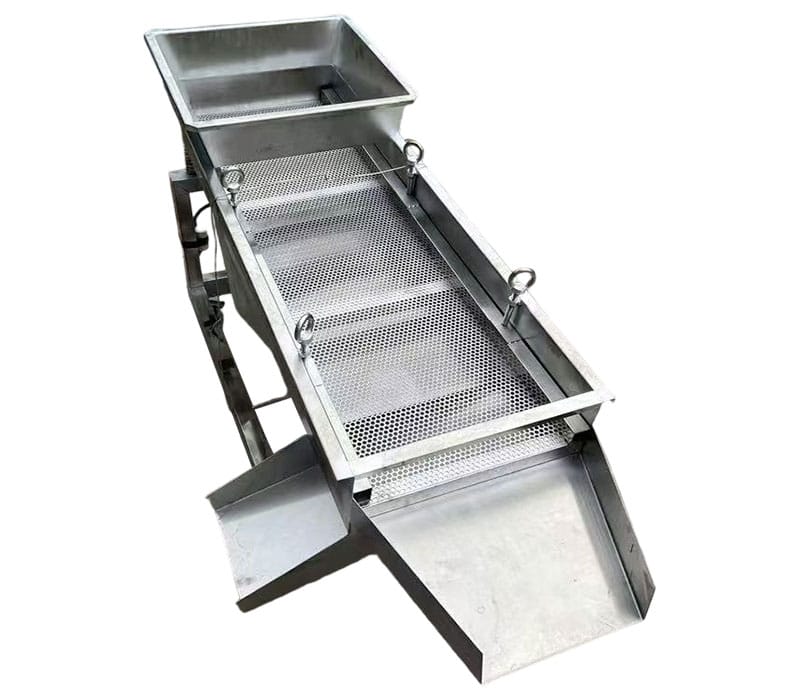
Assess access for inspection, screen replacement and the intended cleaning procedure. Ask how the screen medium is secured and identified after removal. The stainless steel vibrating sieve should fit the site's changeover process, including the handling of removed material and components. Do not infer a universal hygienic suitability from a material name alone.
Request the support, mounting, electrical and service requirements of the offered machine. Include operator access and the collection arrangement for each discharge. A production layout that makes one outlet difficult to collect from can undermine an otherwise successful separation trial. Evaluate the complete material route when reviewing the drawing.
Record stainless steel vibrating sieve acceptance conditions
The accepted proposal should identify the machine, screens, sample references, feeding conditions and measured results. Preserve exceptions where the trial cannot reproduce an important production condition. Link the commercial capacity and quality statements to the evidence that supports them.
At receipt, compare the supplied stainless steel vibrating sieve and screen references against the order before commissioning. Retain the machine identification and parts list. During site checks, record differences from the factory trial, including feed condition and collection arrangement, so unexpected results can be investigated systematically.
Ask for replacement-screen and wear-part references before routine production begins. If several screen configurations are ordered, label and store them so the tested setup can be recovered accurately. A good maintenance record connects each production result with the screen and machine settings actually used.
Send Jinyuan a stainless steel vibrating sieve inquiry
Provide a description of the feed, representative samples, required product fractions and the intended measurement method. Add the desired rate, feeding arrangement, construction requirements and layout restrictions. Ask Jinyuan for an identified configuration and sample-trial proposal with clear reporting terms.
Review the screening product information and screening equipment category, then send the separation brief through the inquiry form. A supported stainless steel vibrating sieve decision rests on traceable material, an identifiable screen arrangement and results that can be interpreted consistently. Those details make capacity and quality claims useful for an actual production process.
Review the stainless steel vibrating sieve product information and Screening Equipment range, then send the application and evidence requirements for a configuration-specific proposal.
Frequently asked questions
What sample should I send for a stainless steel vibrating sieve trial?
Send an identified sample collected by a method appropriate to the feed and purchasing decision. Preserve relevant moisture and handling condition, and include difficult routine variants where necessary. Agree quantity, preparation and intended use of the trial before dispatch.
Is mesh number enough to specify a stainless steel vibrating sieve screen?
No. Request the actual aperture, units, screen-medium details and a replacement reference. Different conventions or construction details can make a mesh description ambiguous. The specification should reproduce the arrangement tested and accepted.
Is product yield the same as stainless steel vibrating sieve separation recovery?
No. Product mass yield describes accepted total mass relative to feed. Recovery of a desired class describes how much of that class reaches the accepted product. Define each percentage and obtain the underlying masses and analytical results before comparing claims.
How should I evaluate stainless steel vibrating sieve capacity?
Link rate to the actual sample, feeding arrangement, screen configuration and achieved separation result. Record duration and interruptions. A maximum rate without output-quality evidence does not establish useful capacity for a specific product.
What should a Jinyuan stainless steel vibrating sieve quotation identify?
Request the exact geometry and model, screen references, deck arrangement, construction materials, feeding requirements and service access. Include a representative trial with agreed masses, analytical method and acceptance definitions, and make unresolved conditions explicit.